Choice Architecture
The design of the environment, context, and presentation format within which people make decisions. Popularized by Thaler and Sunstein (2008), the concept holds that every choice situation is inevitably structured in some way, and that structure—whether intentional or not—influences what people choose. Key design levers include defaults, the number and order of options, framing, and commitment devices.
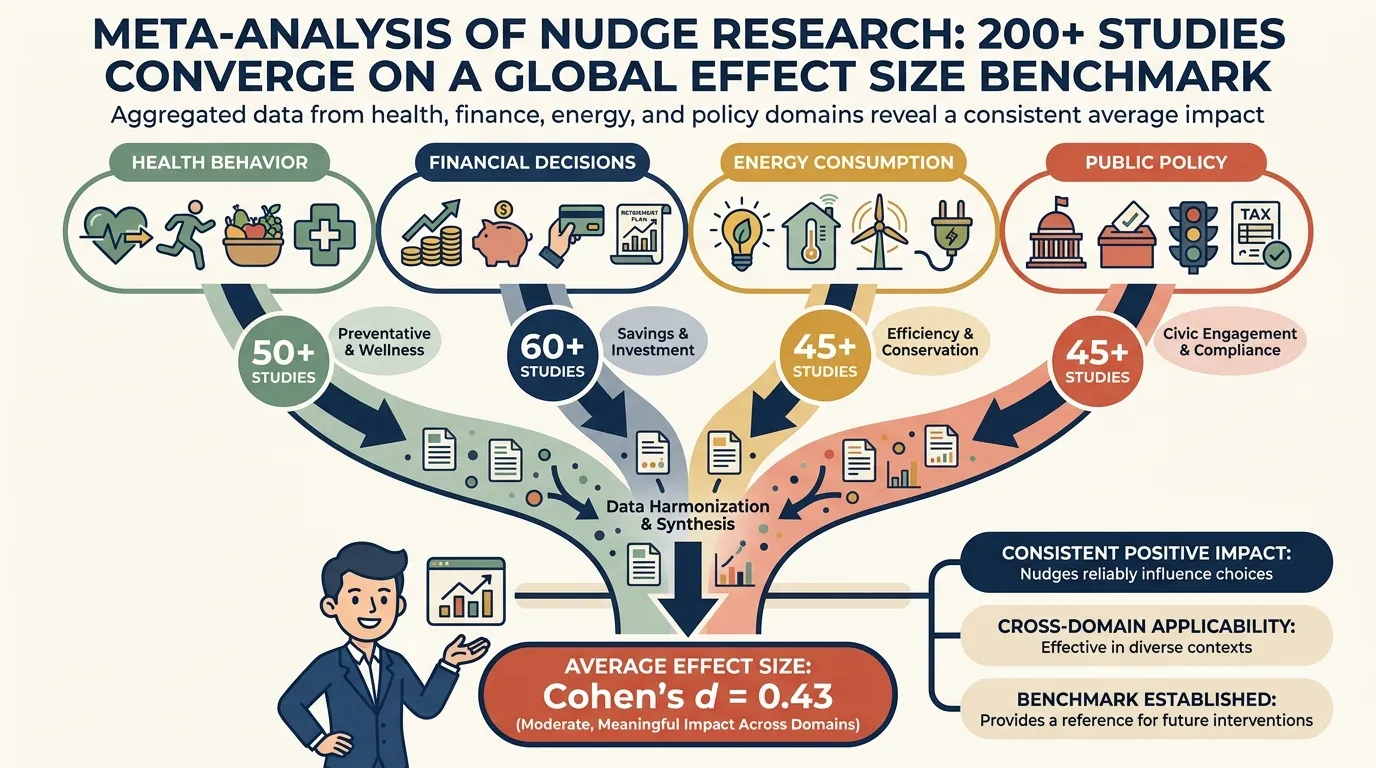
Nudge is the primary practical tool of choice architecture: behavioral change achieved through environmental design rather than mandates or incentives. The Mertens et al. (2021) Meta-Analysis estimated the average Effect Size of choice-architecture interventions at Cohen’s d = 0.43, with substantial variation across domains and design quality.