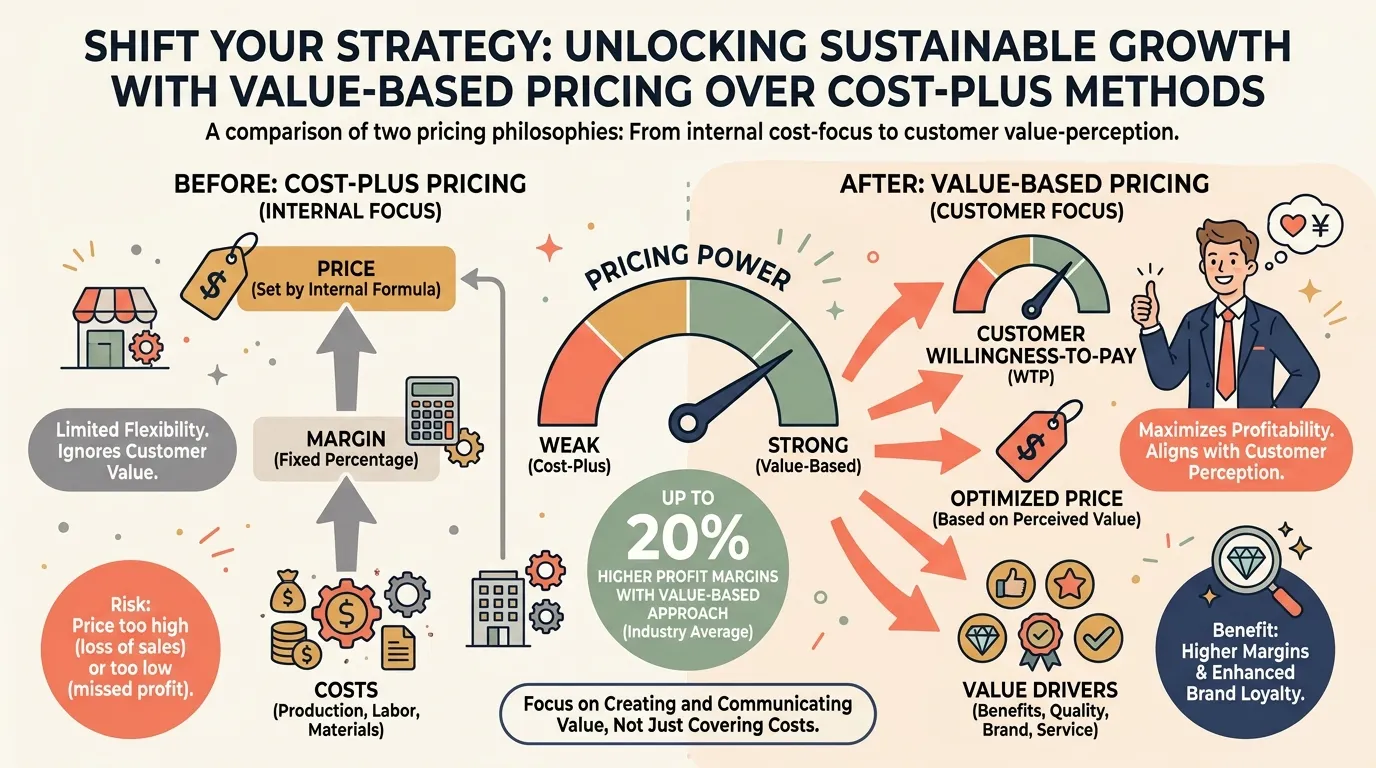
The Three Consumer Shifts Rewriting Marketing in 2026: Purpose, the Value-Cost Paradox, and the Social Commerce Surge
72% of consumers say sustainability shapes their choices; 60% still put affordability first — here is how to navigate the contradiction
A 2026 consumer behavior report from Point2Web identifies three structural shifts in how people buy — and the first two appear to be in direct contradiction with each other. Seventy-two percent of consumers report increasing their sustainability-driven purchasing. Sixty percent still rank affordability as their primary buying criterion. With 32.8% of consumers reporting their financial situation is worse than the previous year, this tension is not a niche concern — it is the dominant psychological condition of the 2026 buyer. The third shift, the explosion of Social Commerce, adds a new behavioral layer: the merger of entertainment and purchasing is dissolving the traditional distance between inspiration and transaction.
Shift 1: Purpose-Driven Consumption
Purpose-Driven Consumption is not a new phenomenon, but its scale has crossed a threshold. When 72% of consumers actively shape their buying habits around sustainability and social responsibility, Ethical Consumption moves from a niche positioning opportunity to a mass-market behavioral baseline.
The mechanism is well-explained by self-congruity theory: purchasing from a brand that shares your values is not merely an ethical act — it is an identity affirmation. The brand becomes a vehicle for expressing who you are (or who you want to be). Point2Web’s data reports a ~20% loyalty premium for brands perceived as values-aligned, a figure consistent with other studies showing that Identity-Based Preferences drive retention more reliably than product features or pricing alone.
The practical complexity: “purpose” must be legible, specific, and verifiable. Vague sustainability claims — “we care about the planet” — trigger skepticism and can backfire through the lens of greenwashing accusations. Purpose-driven positioning that works is operationally grounded: specific supply chain transparency, verifiable carbon measurements, concrete social programs with named beneficiaries. The consumer’s question is not “does this brand have values?” but “can I trust that this brand means it?”
Shift 2: The Value-Cost Paradox
The tension between Shift 1 and Shift 2 is real, not statistical noise. Over 40% of consumers report willingness to pay a premium for values-aligned products. Over 60% still rank affordability as their top priority. These numbers are compatible because the same consumer can hold both positions simultaneously — regulated by which motivational system is active at the moment of decision.
Regulatory focus theory provides the framework. Promotion-focused consumers (pursuing ideal outcomes) activate their purpose-driven preferences when financial pressure is low and the purchase feels like a self-expression opportunity. Prevention-focused consumers (avoiding loss and protecting resources) default to affordability when financial pressure is high or the purchase feels high-stakes. Point2Web’s finding that 32.8% of consumers report deteriorating financial situations means a significant portion of the market is in a chronic prevention-focused state — even among consumers who, in better times, would prioritize values.
The brand response cannot be binary (either values-focused or price-focused). Brands that have navigated this well typically use a tiered approach: a visible, credible values commitment at the brand level, with genuine accessibility at the product level. This is not a discount strategy — it is an inclusion strategy. “You can participate in purposeful consumption at a price that works for you” resolves the paradox rather than forcing consumers to choose.
Shift 3: Social Commerce and the Entertainment-Purchase Merger
The projection that over 17% of online sales will pass through social platforms in 2026 — and that US live commerce will reach $50 billion — represents a structural shift in where and how purchase decisions are made, not just where they are executed.
Live streaming commerce works through a distinct psychological mechanism from standard e-commerce. The combination of social presence (others watching, interacting, buying), real-time social proof (visible purchase counts, live reactions), and the artificial scarcity of time-limited offers creates a high-arousal decision environment. In this environment, the normal deliberative friction of e-commerce — reading reviews, comparison shopping, abandoning the cart — is compressed or bypassed entirely.
The Social Proof mechanism operates differently here: rather than static aggregate reviews, live social proof is dynamic and immediate. Seeing fifty people react positively to a product in real-time provides stronger social validation than reading fifty written reviews, because the information is temporally fresh and because the viewer is embedded in the social moment rather than evaluating it retrospectively.
For brands not yet in live commerce, the strategic question is not whether to enter but on what terms. The key risk is that live commerce content that feels inauthentic — scripted, over-optimized, disconnected from genuine product passion — fails precisely because the format’s power depends on perceived authenticity. A poorly executed live stream actively damages brand credibility in ways that a poorly executed banner ad does not.
The Intersection Point
These three shifts are not independent trends running in parallel. They intersect at a specific consumer psychology: the 2026 buyer wants to purchase in ways that feel right (purpose alignment), at prices that feel sustainable (cost consciousness), through channels that feel engaging rather than transactional (Social Commerce). The marketing implication is that no single lever addresses all three dimensions simultaneously.
The brands likely to navigate 2026 well are those that treat purpose as a genuine operational commitment rather than a messaging layer, design pricing structures that make values-aligned purchasing accessible across income levels, and approach social commerce as an entertainment investment rather than a sales channel. Those that attempt to check the purpose, the affordability, and the social commerce boxes as isolated tactics — without coherent brand logic connecting them — will face audiences increasingly skilled at detecting the difference.
Practical Orientations
For values-driven positioning: Audit the specificity of your sustainability claims. Could you give three concrete, verifiable numbers about your supply chain or social impact? If not, the claim is not yet credible.
For the value-cost paradox: Consider whether your product lineup creates an on-ramp for prevention-focused buyers. A “starter” tier that maintains genuine quality at accessible price points serves both values and inclusion — and builds a conversion path to premium.
For social commerce: Before launching live streaming, invest in identifying genuine enthusiasts within your brand community who can anchor content with real passion rather than scripted promotion. Authentic voices performing poorly beat polished performers any day in this format.
Related Articles
Moral Foundations Shape How Brands Are Chosen
Designing Out Purchase Anxiety: The 2026 CRO Psychology Playbook for Full-Funnel Uncertainty Reduction
When Clicks Disappear: Five Marketing Trends Dominating 2026
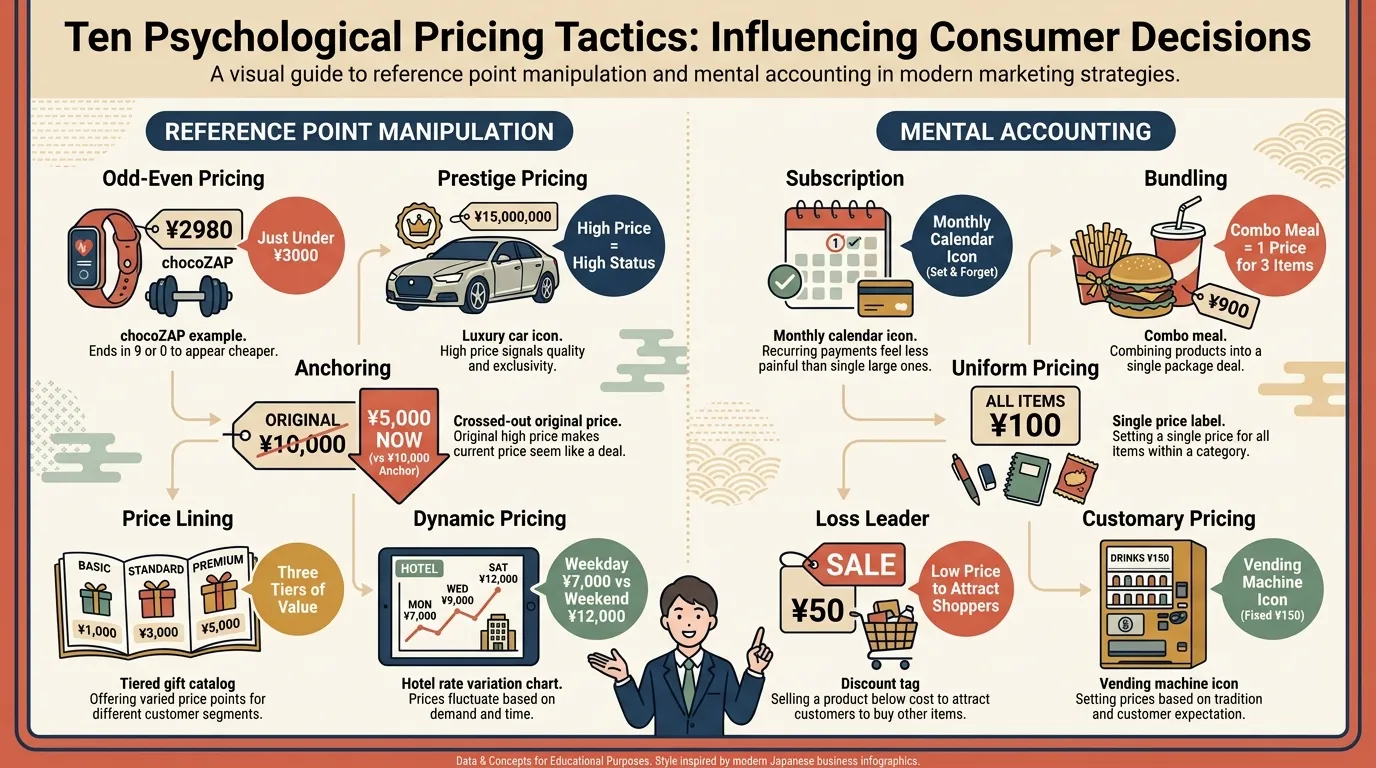
10 Psychological Pricing Techniques: How Reference Points Shape Purchase Decisions
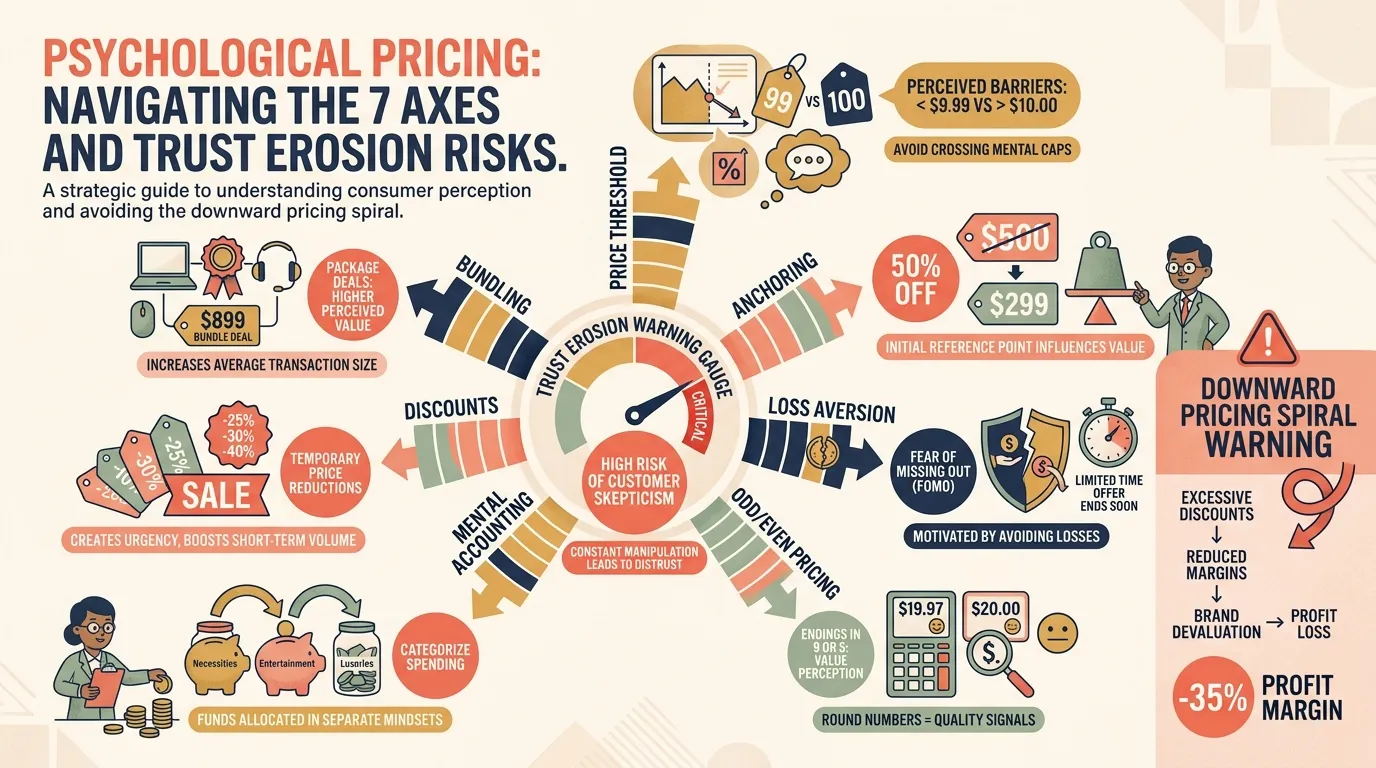
Seven Axes of Psychological Pricing and the Trust They Quietly Erode