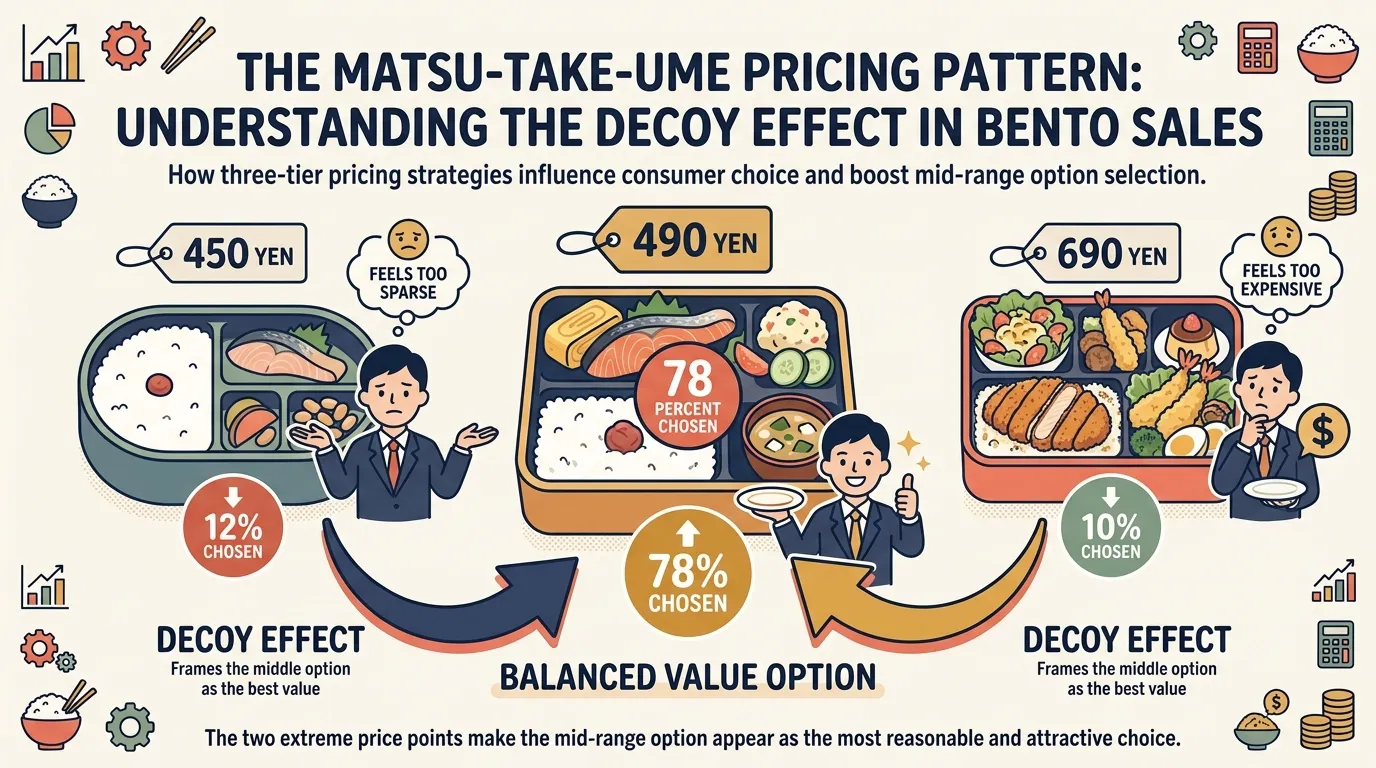
Decoy Effect
A phenomenon in which adding a deliberately inferior option (the “decoy”) to a choice set makes a target option appear as the obviously rational choice. Formally described by Huber, Payne, and Puto (1982) as the asymmetric dominance effect: when the decoy is clearly worse than the target on all relevant dimensions, it provides an asymmetric reference that elevates the target’s perceived value.
In Japanese retail, this mechanism underlies the “matsu-take-ume” (pine-bamboo-plum) three-tier pricing pattern. Origin Bento’s three-tier bento lineup reportedly produced a 78% sales increase for the middle-tier option after introducing the structure. Marketers apply the principle by designing catalog or pricing structures where flanking options serve as comparison anchors rather than genuine alternatives.