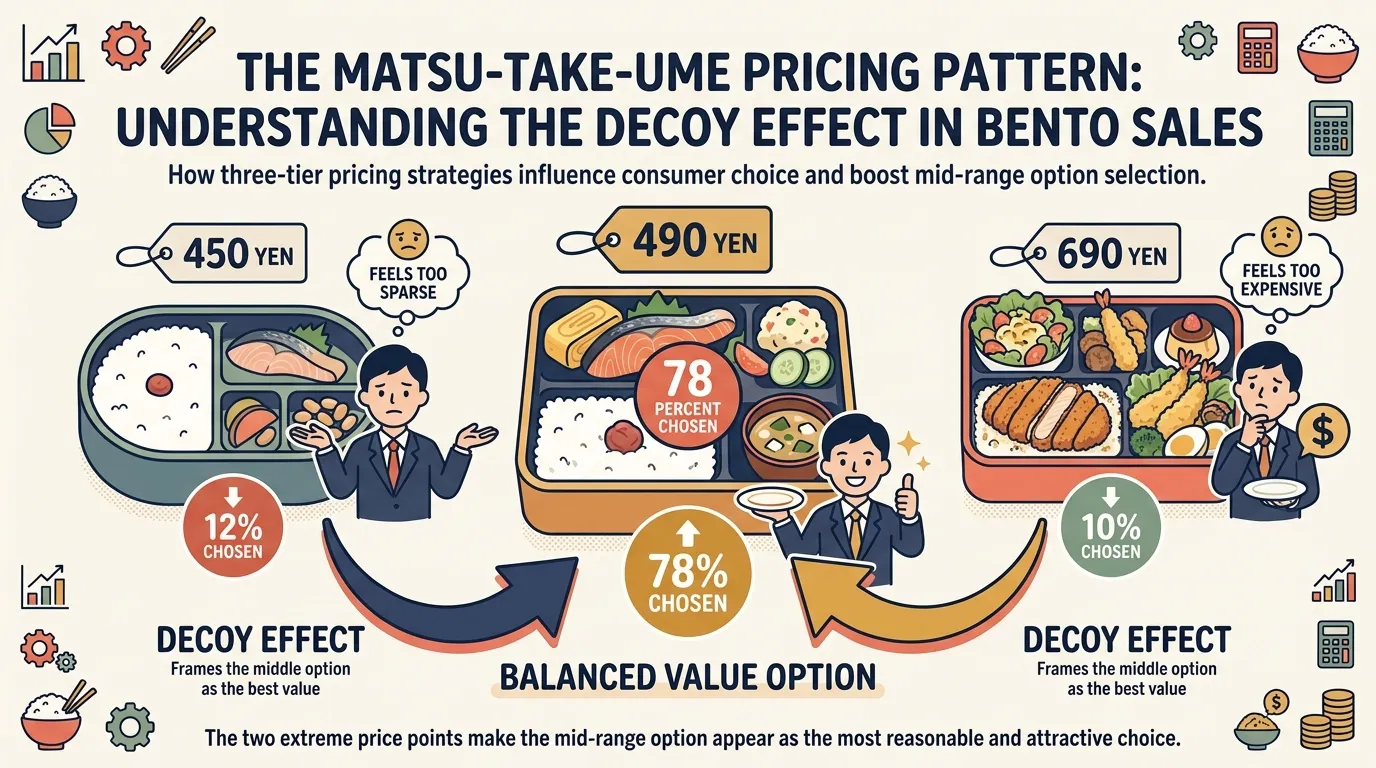
Price Lining
A pricing strategy in which a product lineup is organized into a small number of distinct price tiers, each associated with a corresponding level of quality, features, or prestige. Rather than continuous price variation, consumers choose which “line” fits their budget and purpose. Classic examples include tiered gift catalogs and three-tier pricing menus.
The structure redirects consumer decisions from individual product value comparison to tier selection, which is cognitively simpler and reduces evaluation friction. Price lining naturally generates Decoy Effect dynamics when a middle tier is present, and aligns with variety-seeking behavior by offering clear differentiation without overwhelming choice.