"I Hate It" — Yet I Keep Buying: The Behavioral Economics of Random Merchandise
Nine in ten declare opposition, but revealed preference tells the real story
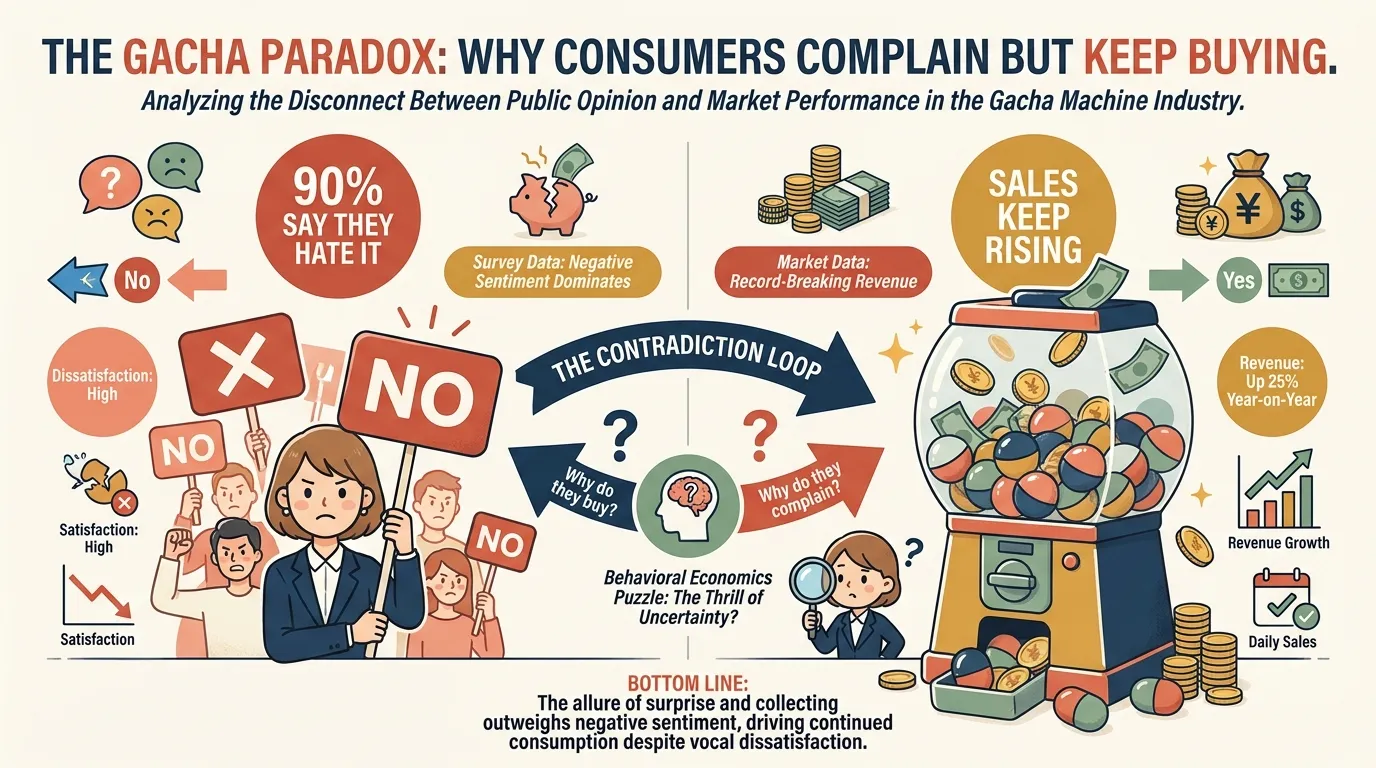
Survey respondents say they hate it. The very same people spin the gacha the next morning. This isn’t hypocrisy — from a behavioral economics standpoint, it’s nearly inevitable.
The Survey That Exposed the Stated-Preference Trap
When Bandai released an internal survey showing roughly 90% of respondents disliked random merchandise, social media erupted. Yet sales didn’t fall. The company didn’t blink.
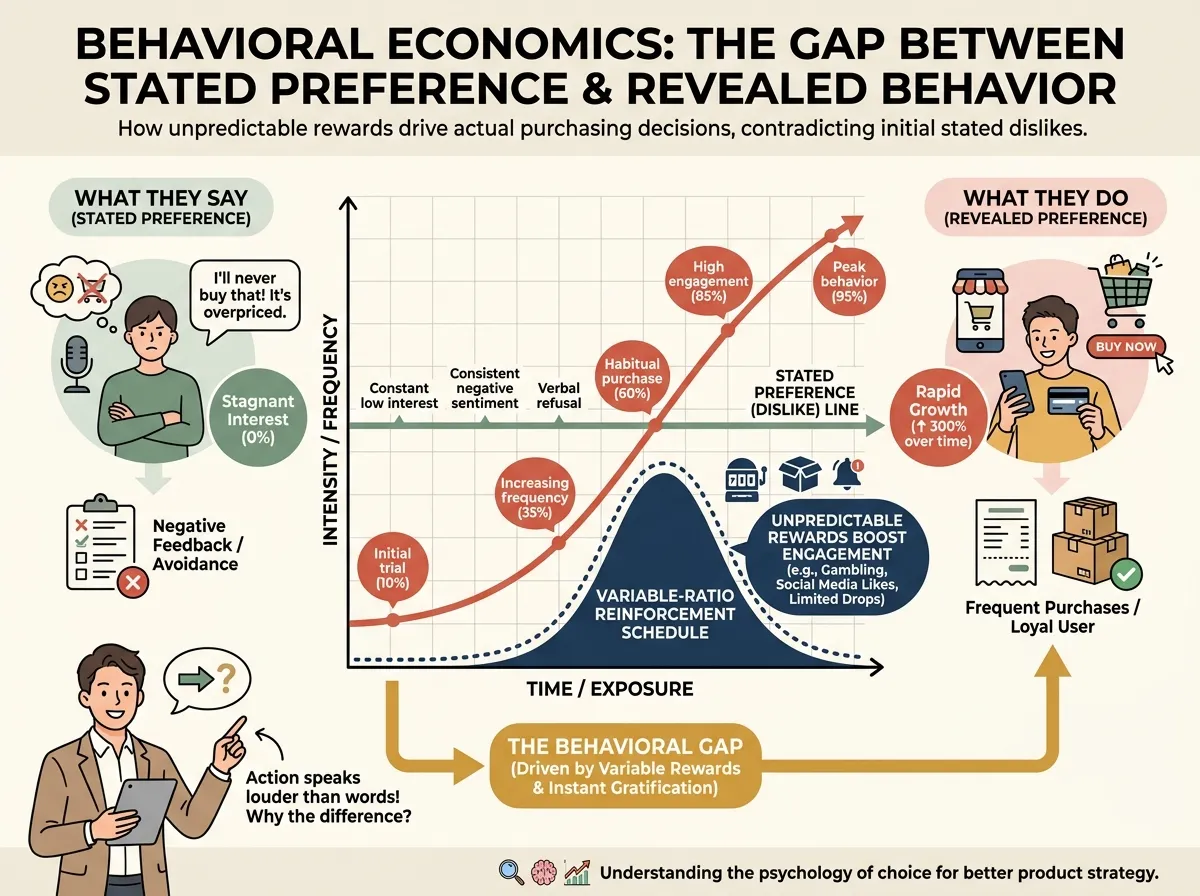
Interpreting this as “consumers are lying” misses the real mechanism. What’s happening is a textbook case of stated-vs-revealed-preference divergence.
People answer surveys as their idealized, ethical selves. They open their wallets as their impulsive, desire-driven selves. The gap between these two modes of self isn’t deception — it’s just how human cognition works.
What gacha-mechanism Design Has Always Known
The gacha-mechanism model is effective because it draws on behavioral science going back to B.F. Skinner’s operant conditioning chamber.
A variable-ratio reinforcement schedule — the core of variable-reward — produces stronger and more persistent behavior than fixed rewards. When the timing of a reward is unpredictable, humans stay engaged longer, spend more, and stop less readily. This is why slot machines never go out of fashion, and why gacha hasn’t been disrupted despite decades of criticism.
The individual transaction cost is kept deliberately small. And the smaller the unit cost, the lower the threshold for “just one more.”
The loss-aversion Loop That Prevents Stopping
Here is where the architecture gets genuinely difficult to escape. Anyone who has pulled a gacha “until the target drops” has experienced the mechanism directly.
loss-aversion explains why stopping feels wrong: the brain interprets halting now as a loss — specifically, the loss of making prior investments pay off. Per Kahneman and Tversky’s prospect theory, losses register at roughly twice the psychological weight of equivalent gains. The longer someone has spent without a hit, the more stopping hurts.
Random merchandise’s power doesn’t live in the probability of winning. It lives in the psychological cost of quitting.
Why Companies Don’t Listen to the Criticism
The reason Bandai isn’t retreating is structurally obvious: the 90% who say they hate it may well be the same 90% who are buying. Stated preference is a projection of moral identity; revealed preference is what the nervous system actually does.
Companies appear to respond to the criticism while running their numbers on the revealed behavior. This isn’t cynicism — it’s rational allocation of attention to the metric that maps to revenue.
Arguments for regulation or ethics reform are important, but the hypothesis that “growing criticism will eliminate random merchandise” misreads the underlying psychology.
Beyond the Debate: A Design Argument
The more productive question isn’t whether to eliminate variable-reward mechanics, but how to deploy them while minimizing harm to vulnerable players.
Pity timers (guaranteed hits after a fixed number of pulls), spending caps, and pull-history transparency are all architectural interventions that are gaining empirical support. They preserve the engagement loop while reducing the long tail of compulsive spending.
If 90% of consumers say they dislike something and a business still runs, the question to ask is not “why don’t they stop?” It’s “what design choices govern the experience?” Stated and revealed preferences will keep diverging — what changes is whether the gap is designed around ethics or against them.
Sources: Toyo Keizai Online, “90% Say They Dislike Random Merchandise — Why It Refuses to Die” (2026)
Related Articles

How Anchoring Quietly Shapes SaaS Pricing
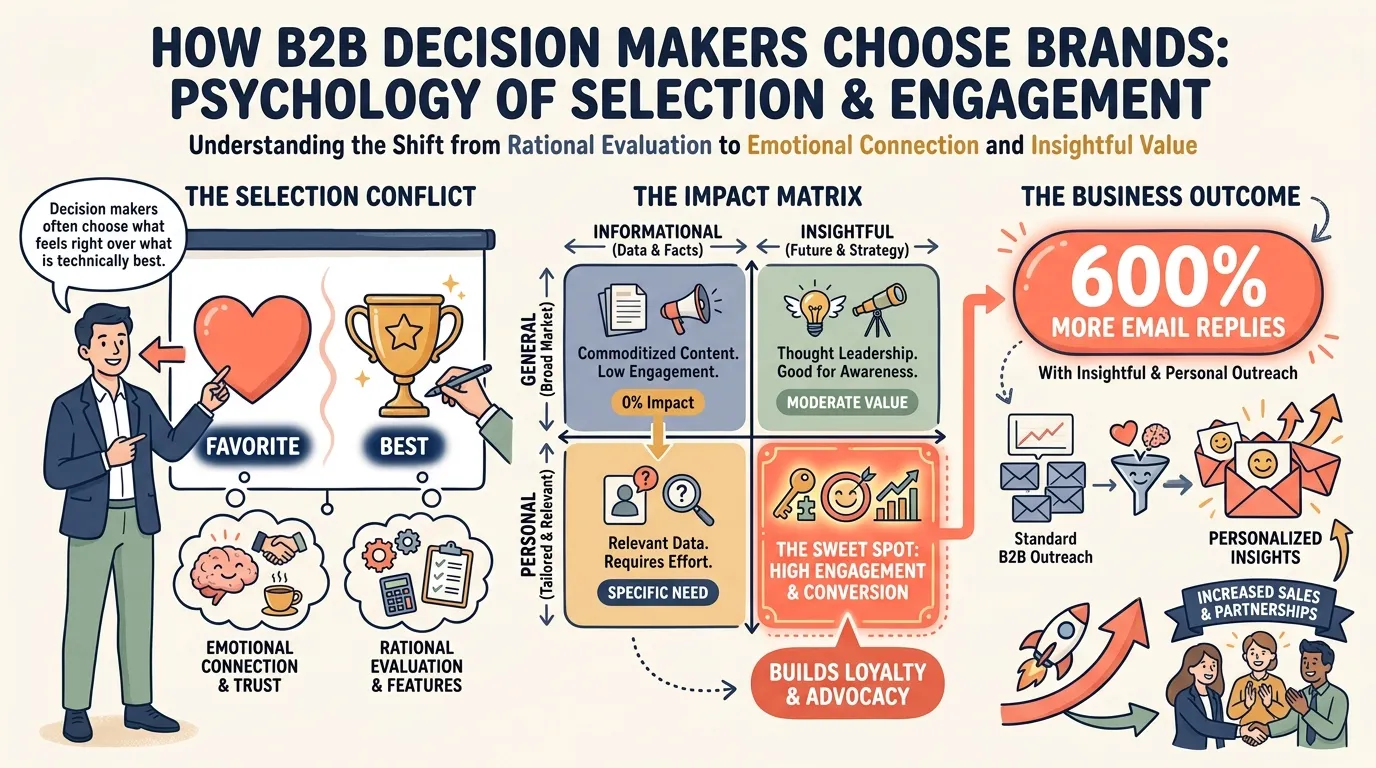
Why B2B Buyers Choose Their Favorite, Not the Best
Designing Sound That Sticks: Brand Memory Lessons from Composer Hiroyuki Sawano

If AI Can't Find You, Your Business Doesn't Start — Adobe CEO on the Agentic AI Gap
Why Prices Ending in 9 Still Sell