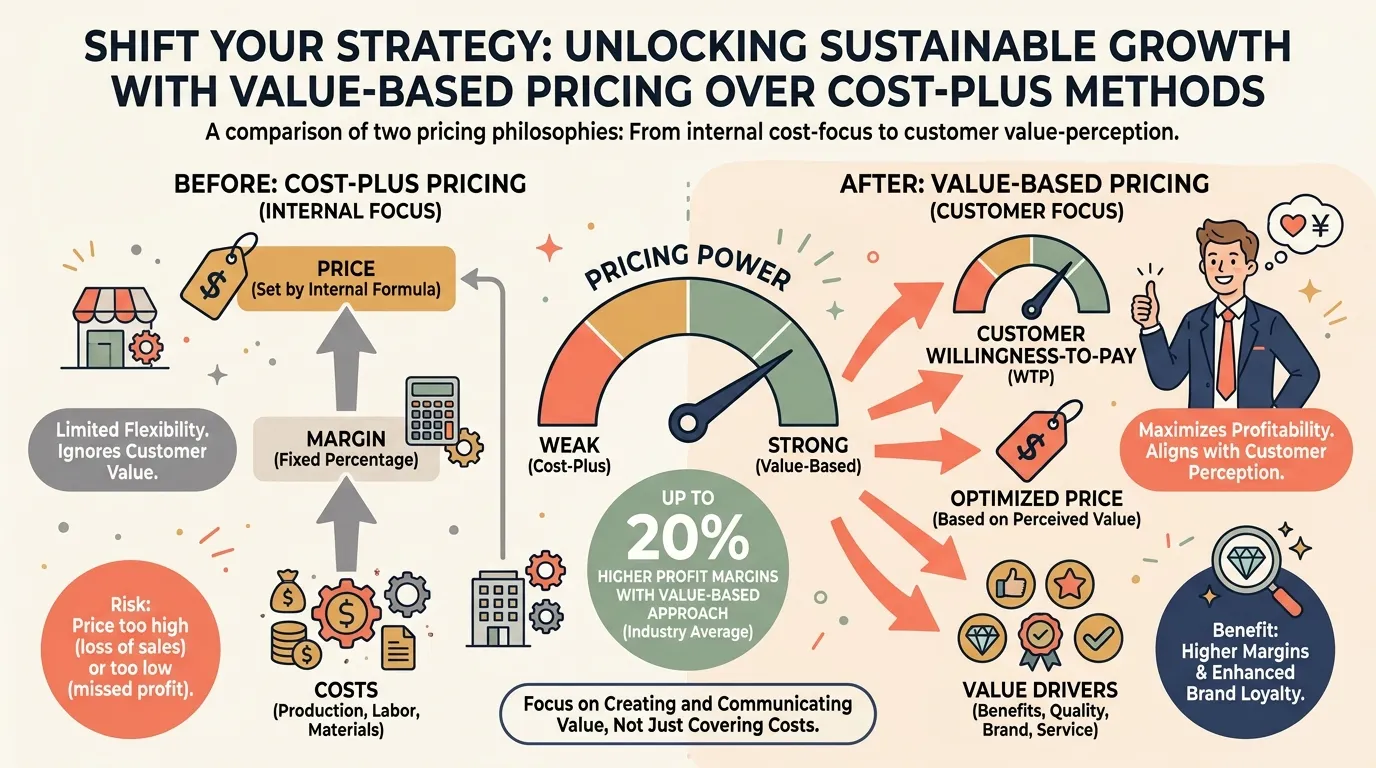
Seven Axes of Psychological Pricing and the Trust They Quietly Erode
Simon-Kucher warns that overusing these tactics breeds discount dependency and erodes brand trust
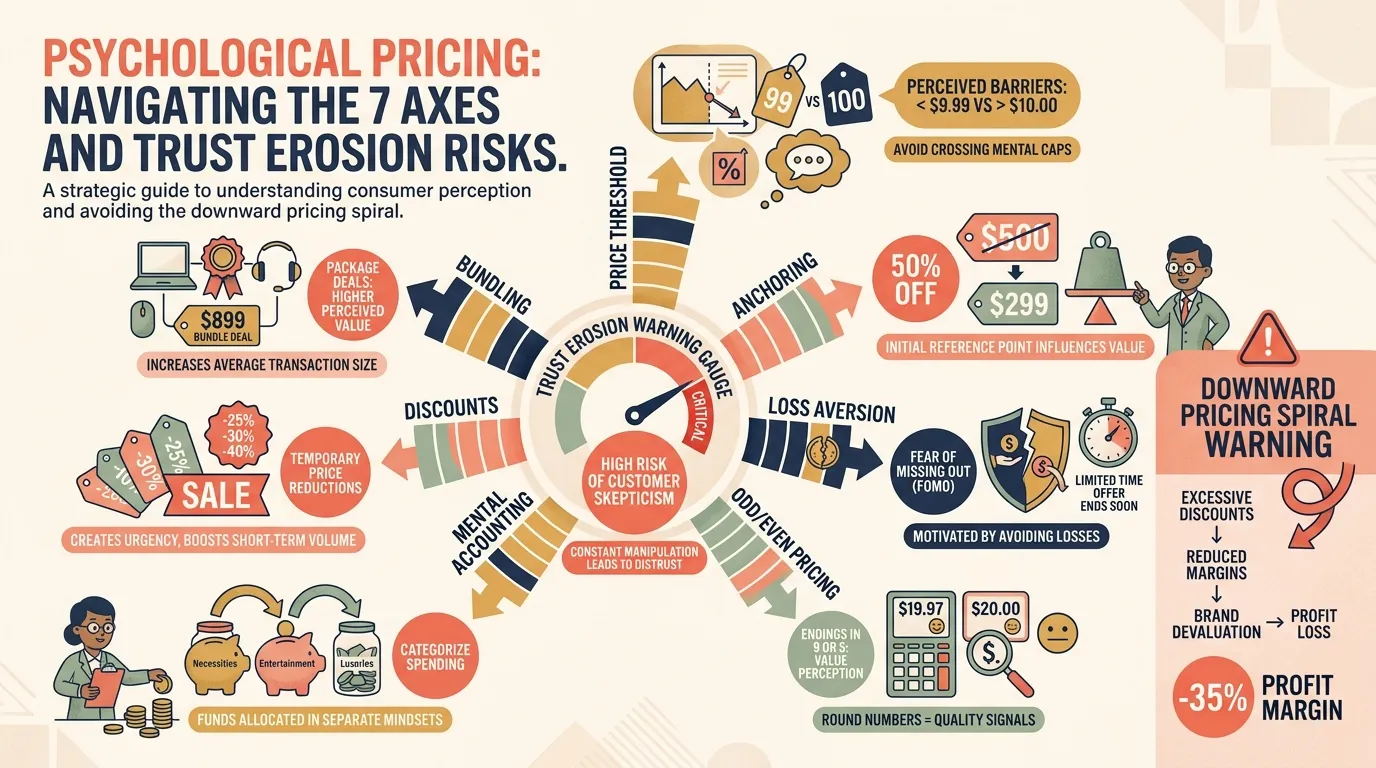
“Psychological pricing works.” Every marketer has heard this. But the follow-up nobody talks about: what happens when you use it too much?
Simon-Kucher’s taxonomy of seven psychological pricing levers — and the firm’s explicit warning about their side effects — offers a useful frame for understanding why the tactics that drove short-term sales last quarter are starting to undermine long-term pricing power this quarter.
The Seven Axes
Simon-Kucher organizes psychological pricing into seven axes: (1) Price Thresholds — the psychological jump points at round numbers like ¥1,000 or ¥10,000; (2) Anchoring Effect — the first number a buyer sees anchors all subsequent comparisons; (3) odd/even pricing — ¥9,800 signals a bargain while ¥10,000 signals quality; (4) Loss Aversion — the asymmetric weight of losses versus gains (roughly 2×); (5) Mental Accounting — why ¥1,000/month feels different from ¥12,000/year; (6) discounts and sales — BOGO and similar constructs that reshape perceived value; and (7) Bundling — packaging items to obscure individual prices and shift the perception of total value.
Each axis has an established evidence base across e-commerce, hospitality, F&B, and SaaS. The question isn’t whether they work — it’s what happens when companies reach for them reflexively.
How Reference Points Become Evidence Against You
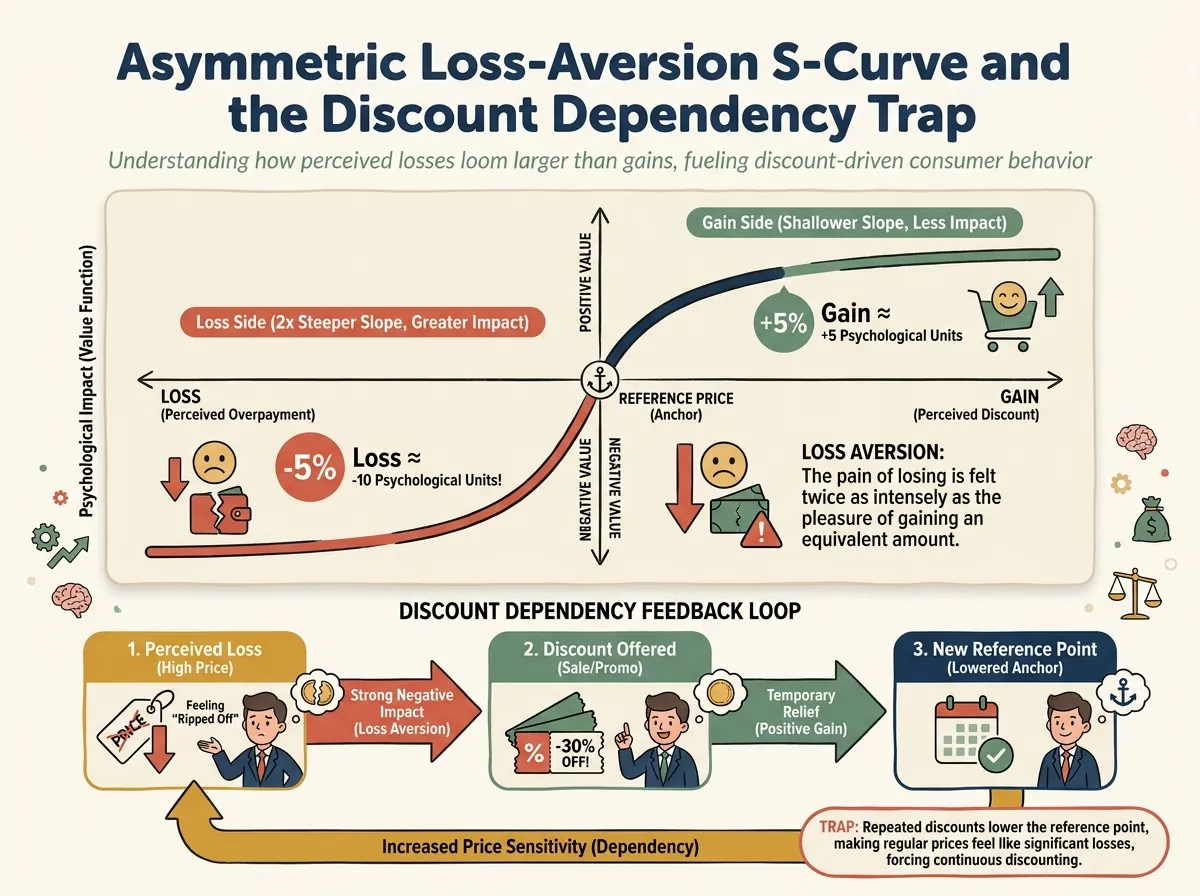
These tactics work by moving reference points. Anchoring Effect in practice: a ¥100,000 product priced at ¥60,000 “just for today” creates a perceived ¥40,000 gain. But when the same discount appears every other week, ¥60,000 becomes the buyer’s new reference point. Show ¥100,000 again and they experience a ¥40,000 loss — which, per Prospect Theory’s asymmetric loss function, hits roughly twice as hard as an equivalent gain.
This is the discount dependency loop. Reference points are learned and updated. The tactic that drove conversion six months ago is now the benchmark against which your standard price looks overpriced. Efficacy decays — and worse, it inverts.
The Hidden Cost: Trust Erosion
Psychological pricing borrows against long-term brand trust and converts it into short-term revenue.
Cialdini’s influence taxonomy distinguishes short-term persuasion from long-term relationship building. Heavy use of anchoring and Loss Aversion framing trains buyers to feel manipulated. Simon-Kucher flags this explicitly: high-involvement categories — insurance, healthcare, education, premium retail — see the fastest trust erosion. Buyers in these categories memorize prices, compare across periods, and ask “why was it cheaper last month?” Once that question becomes common, you’ve locked in a position where discounts are required to close.
The Two Axes That Age Better
Mental Accounting and Bundling, used carefully, generate less backlash because they work with perceived value rather than manufactured urgency.
Monthly subscription pricing reduces the pain of an annual commitment — this is less manipulation and more payment architecture. When the underlying service delivers, it doesn’t corrode trust over time. Similarly, Bundling elevates total perceived value when each component is genuinely useful to the buyer. The failure mode is padding: bundling low-value elements to inflate apparent worth. Post-purchase disappointment then spreads via reviews.
When Price Thresholds Still Work
The ¥9,800 vs ¥10,000 gap is the oldest trick in the book. Does it still hold in an era of price-comparison browsers?
In high-comparison contexts — Amazon listings, Google Shopping — the below-threshold signal persists because buyers scan dozens of options and process the cheap-signal quickly. In low-comparison contexts — a flagship store, a premium DTC brand — a round number can actually convey quality. The axis is context-dependent, not universally effective or ineffective.
The Underrated Move: Knowing When Not to Use Them
The real competitive advantage Simon-Kucher’s taxonomy surfaces isn’t knowing the seven axes — it’s knowing which ones to withhold in which contexts.
Competitors who reach for all seven in high-involvement categories often slide into pricing spirals, racing to signal the biggest discount. Choosing not to discount in precisely those contexts is how brands protect their reference price over the long run. Knowing the tactic and being able to set it down are, in practice, two different skills.
Sources: Simon-Kucher, “Behavioral & Psychological Pricing Strategy”
Related Articles
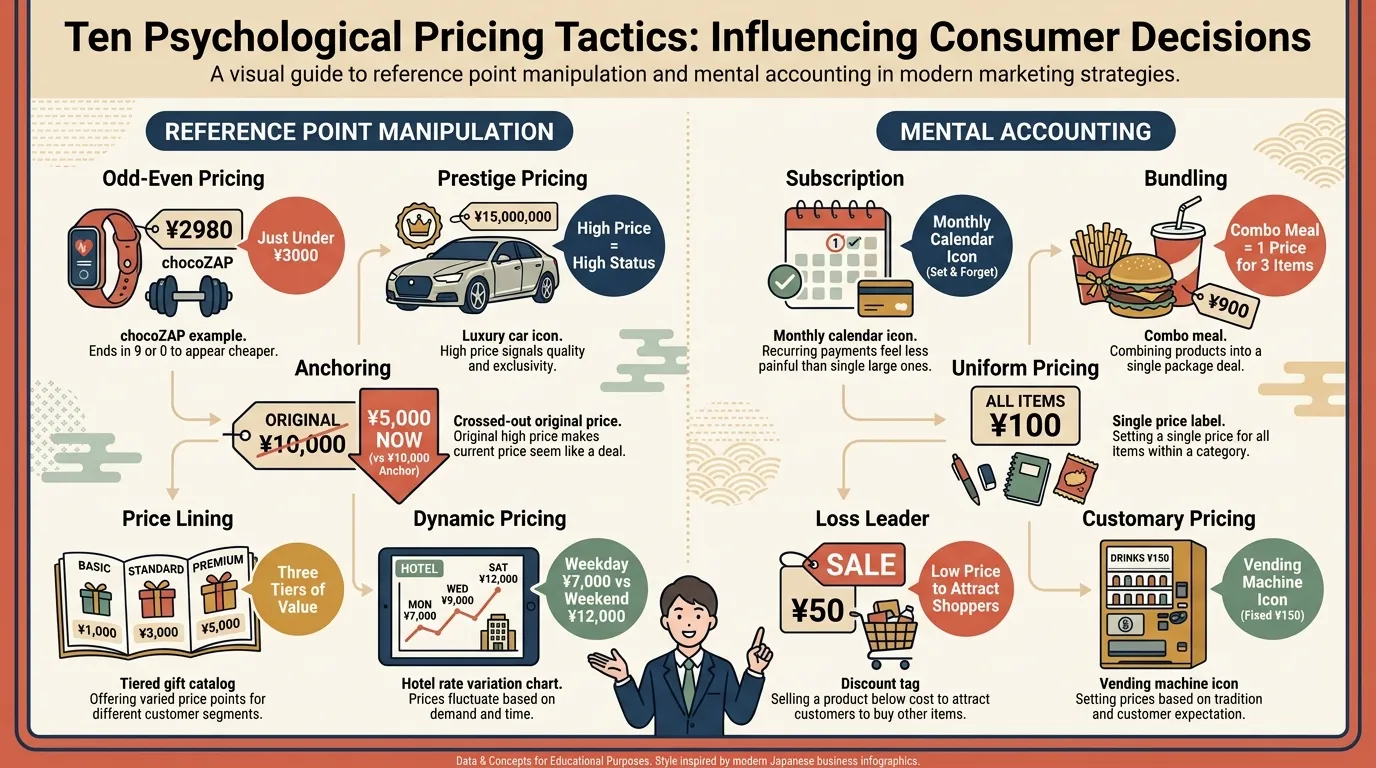
10 Psychological Pricing Techniques: How Reference Points Shape Purchase Decisions
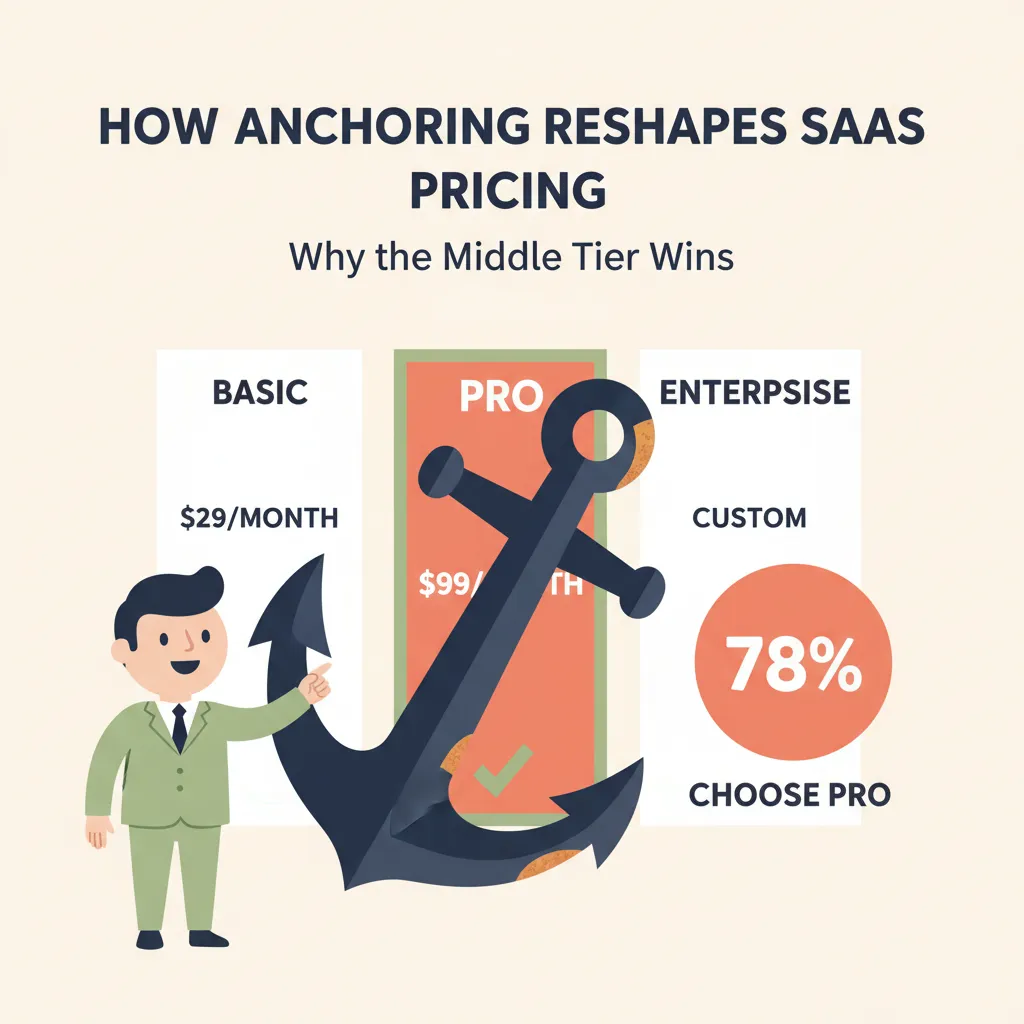
How Anchoring Quietly Shapes SaaS Pricing
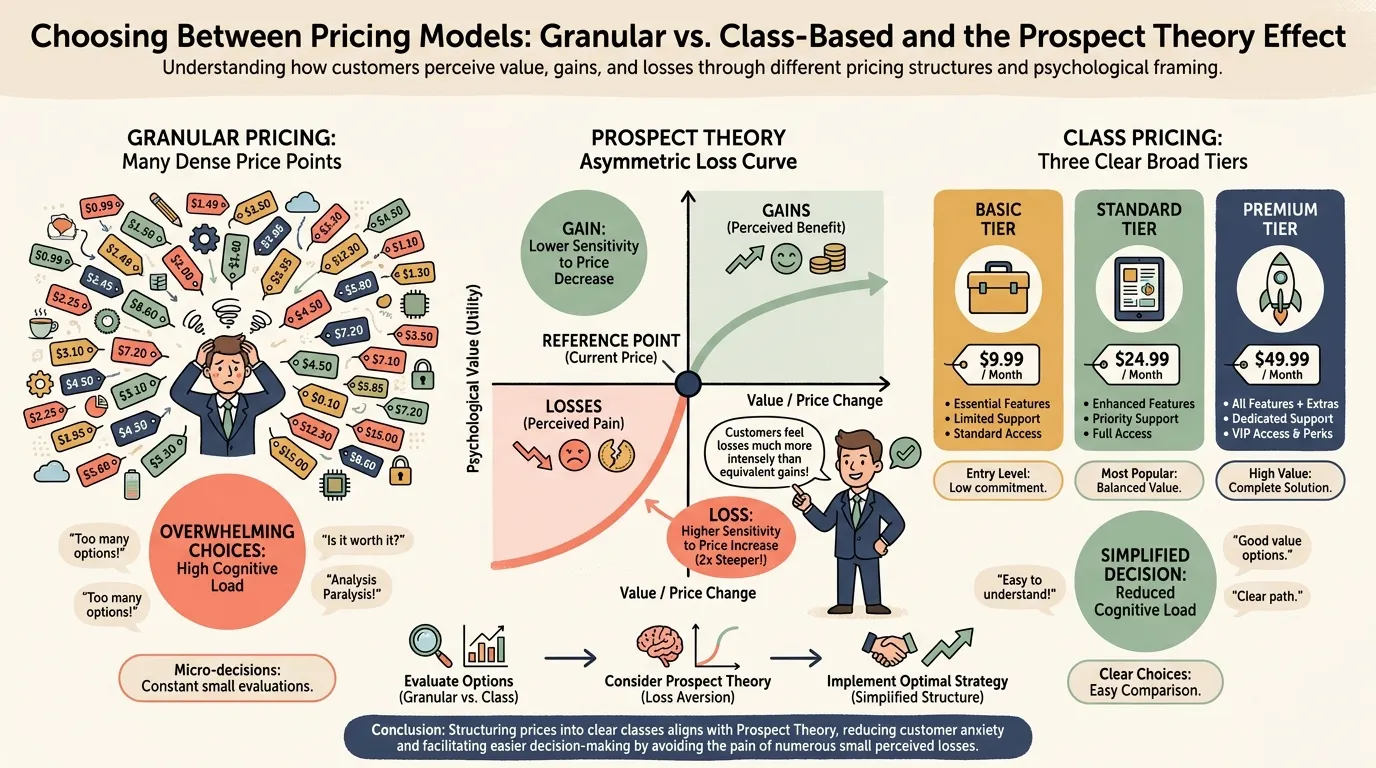
Why AI-Optimized Pricing Still Gets Profits Eaten by Consumer Psychology
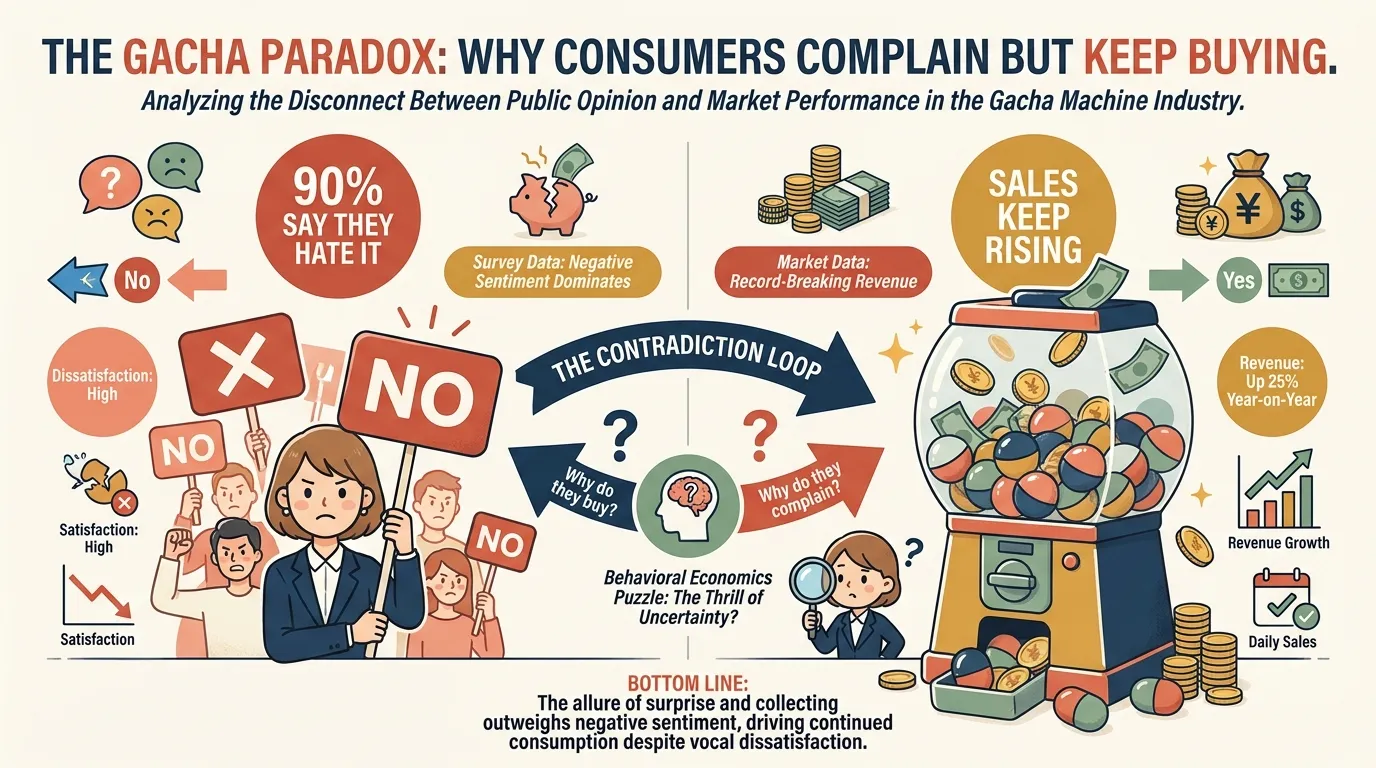
"I Hate It" — Yet I Keep Buying: The Behavioral Economics of Random Merchandise
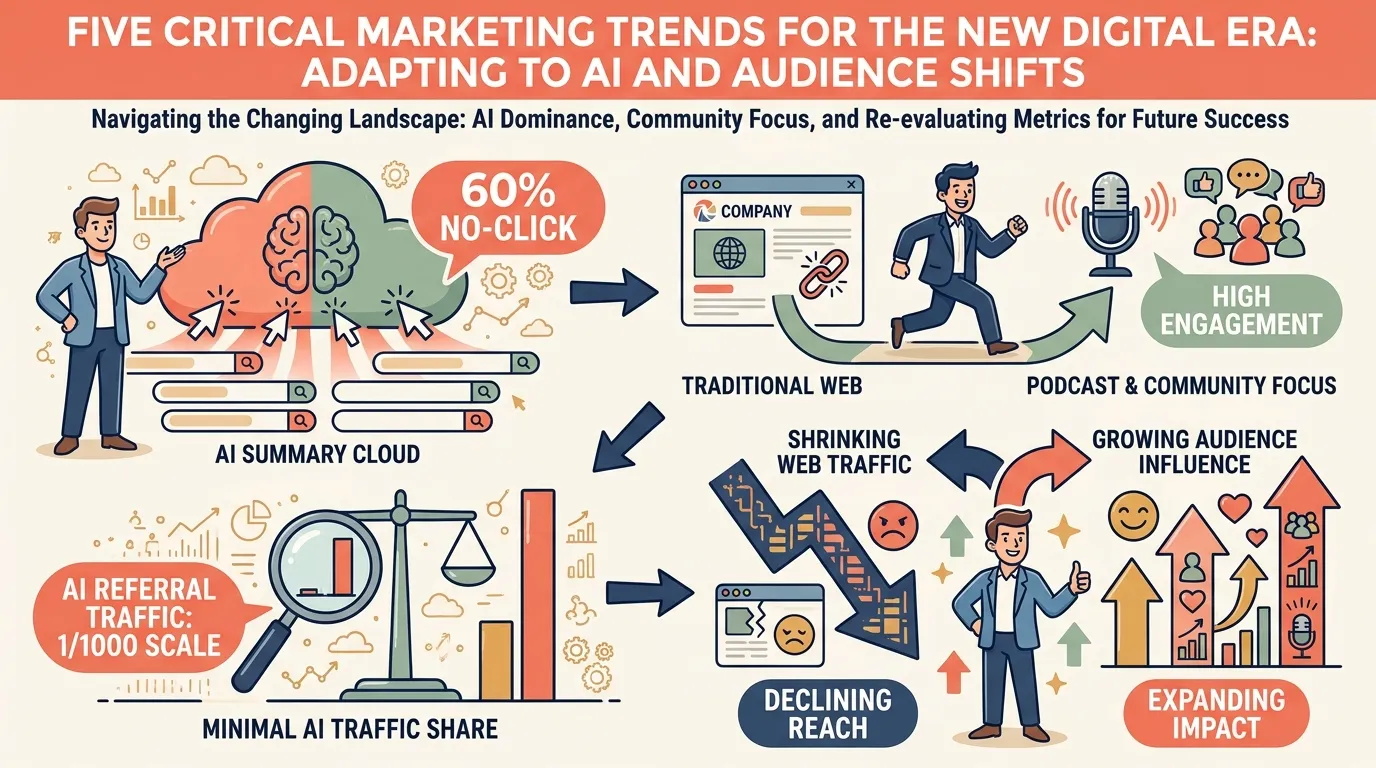
When Clicks Disappear: Five Marketing Trends Dominating 2026