Why Japanese Companies Keep Apologizing for Price Increases — and How Value-Based Pricing Fixes It
Reverse-engineer from buyer WTP and the conversation shifts from apology to proposition
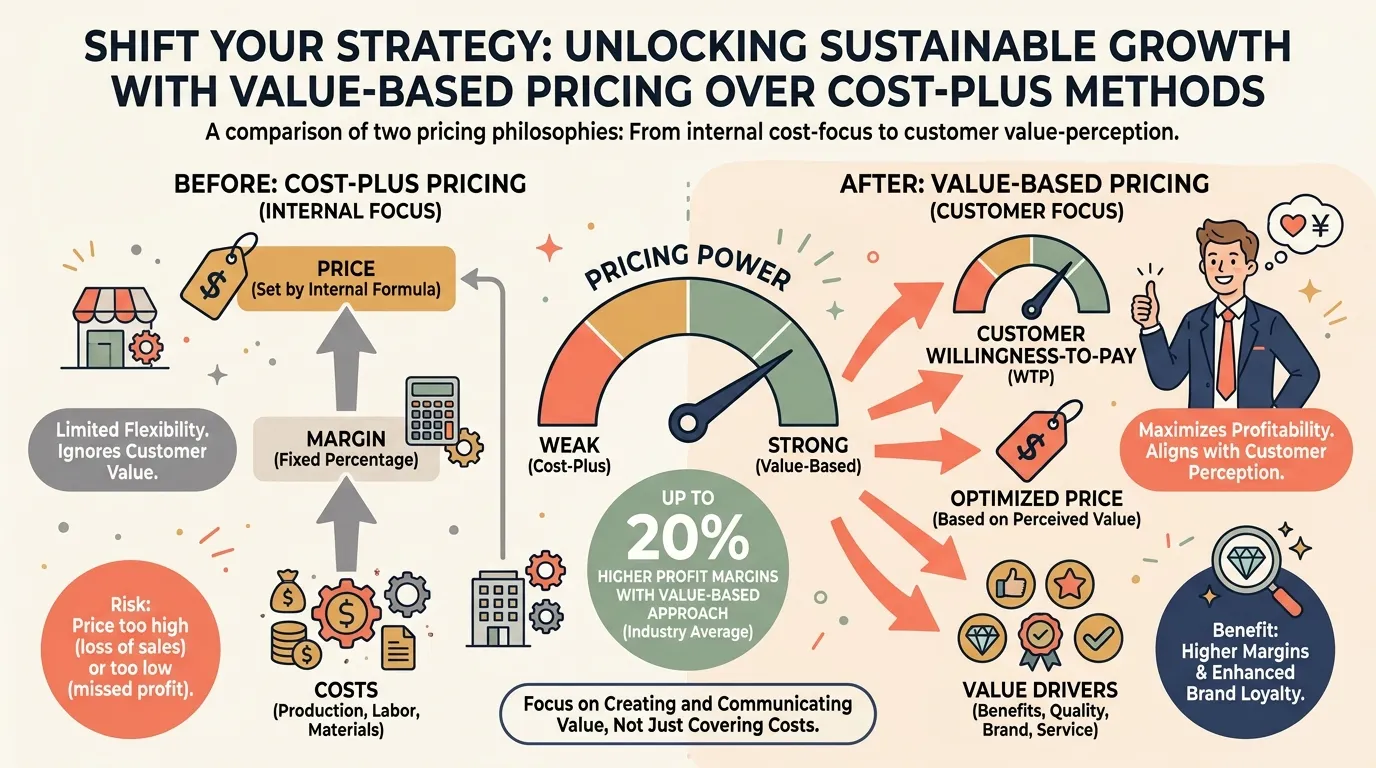
In Japan, price increases almost always begin with an apology. “Due to rising raw material costs and the weak yen, we regret to inform you that we must raise our prices.” The communication centers on the company’s circumstances, asks for understanding, and tries to minimize the perceived magnitude of the increase.
This is a symptom of a structural problem: when a company can only justify its prices by citing its own costs, it has handed the definition of “fair price” entirely to the buyer — and buyers are not generous evaluators of supplier margins.
The Most Neglected “P” in Marketing
Of the four Ps — Product, Price, Place, Promotion — Price receives the least deliberate attention in most Japanese organizations. CMOs come disproportionately from advertising and brand backgrounds. Pricing decisions get made by sales teams responding to competitive pressure, without a framework.
Buffett treats Pricing Power as a primary metric when evaluating businesses: the ability to raise prices without losing customers is, in his view, the most reliable sign of durable competitive advantage. Critically, Pricing Power can improve business performance without new product development — just by changing how you think about and communicate price. For a country where over 70% of companies pursuing DX report no improvement in profitability, pricing is the overlooked growth variable.
What Value-Based Pricing Actually Means
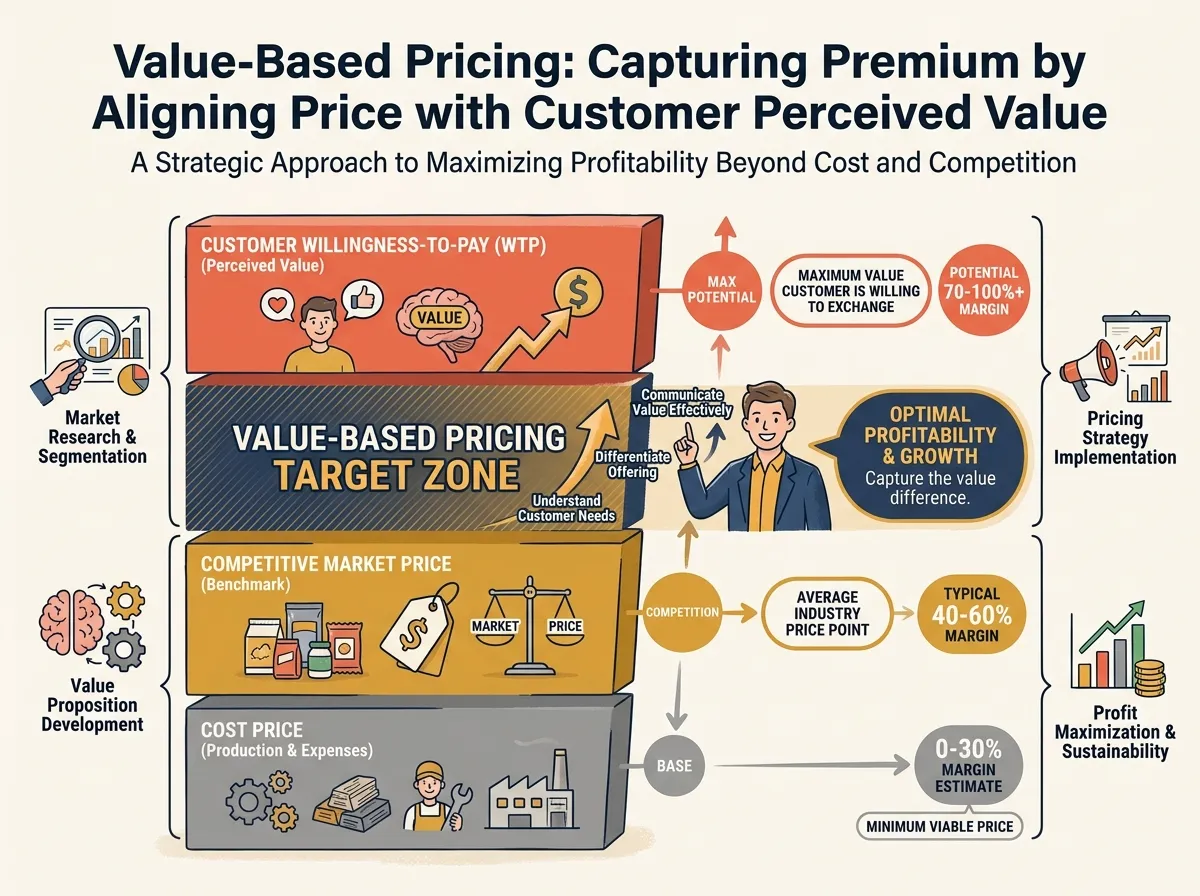
Value-Based Pricing inverts the standard question. Cost-plus pricing asks: “What did this cost us, and what margin do we need?” Value-based pricing asks: “What is this worth to the buyer — and what is their Willingness to Pay (WTP) (WTP)?”
WTP isn’t something buyers consciously calculate. It emerges from a composite of experience, brand signals, comparison to alternatives, and self-identity alignment. A product that matches a buyer’s self-concept commands higher WTP than an objectively superior product that doesn’t. This is why premium positioning works even when the functional gap is narrow.
The Psychology Behind WTP
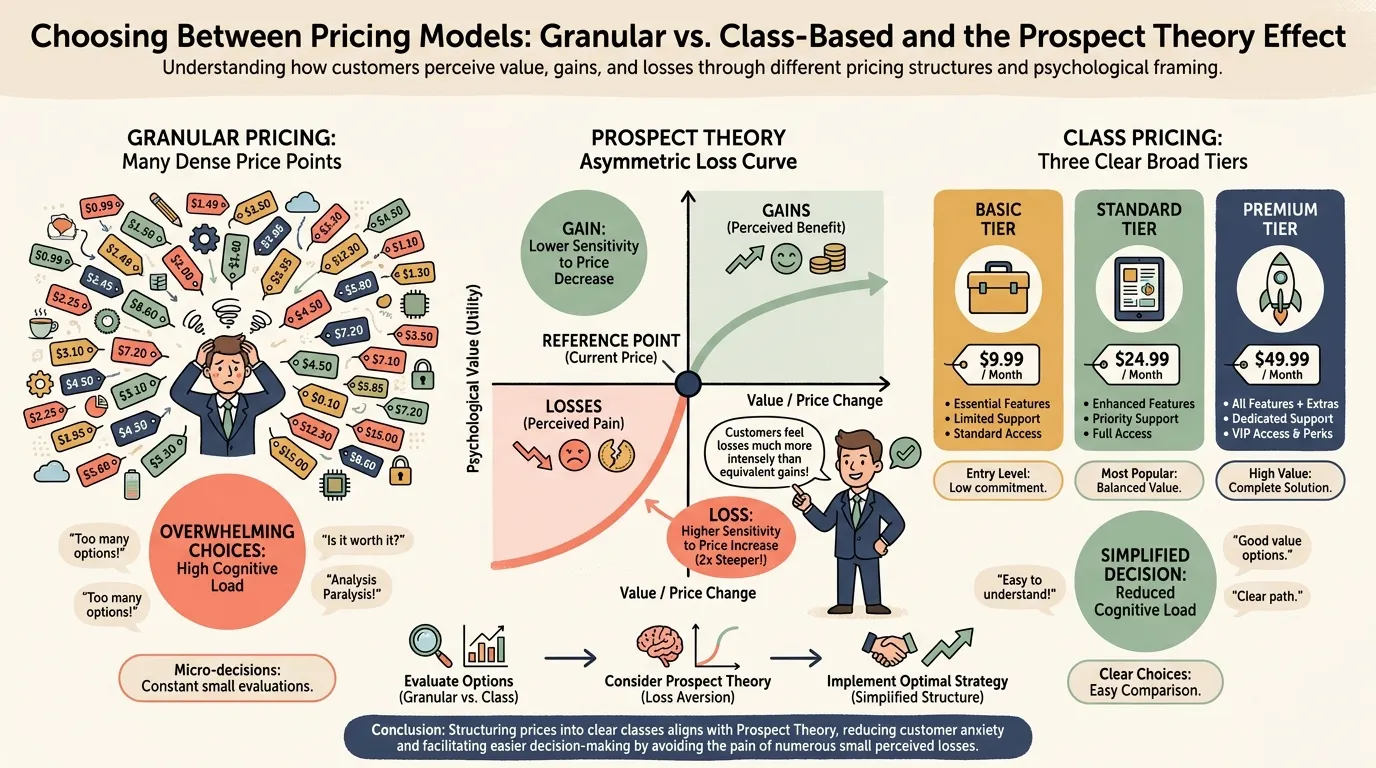
Thaler’s transaction utility theory explains how buyers evaluate price. They don’t judge absolute price — they judge price relative to their internal Reference Price. If the transaction price is below the reference price, the buyer gains transaction utility (the “good deal” feeling). Above it, the transaction registers as a loss.
This means Willingness to Pay (WTP) and Reference Price are independently addressable. Raising WTP involves improving perceived quality, brand narrative, and feature salience. Raising Reference Price involves context: a product placed in a premium channel, surrounded by premium visual language, with a premium brand story, updates the buyer’s baseline expectation of what this category should cost.
In a market where preference-driven consumers — buyers who prioritize fit over price — are growing, this two-track approach is especially effective.
From Apology to Proposition
A cost-based price increase says “this is our problem.” A value-based price increase says “this is our offer.”
In practice the shift looks like this: instead of “We’re raising prices by ¥500 due to raw material costs,” you say “We’ve redesigned the product and it now outperforms the category on the dimensions that matter to you — we’re adjusting price to reflect that.” The second framing invites the buyer to evaluate the trade-off on value terms, not to judge the fairness of your cost structure.
The apology framing reinforces the premise that price increases are inherently bad. The proposition framing asserts that prices reflect value, and that the value is there. Both result in the same price increase — but only one builds the long-term pricing relationship that reduces churn.
Three Questions to Diagnose Your Pricing Power
Pricing Power builds slowly, but it can be measured now. Three questions:
- Can you articulate why your customers choose you when alternatives exist? If the only answer is price, price is your only differentiation.
- When you announce a price increase, do most customers express understanding or resistance? If predominantly understanding, your price may already be below WTP.
- If a competitor cuts price by 10%, do you need to match it? If not, your pricing power is working.
Where to Start
The transition doesn’t require a company-wide repricing exercise. Start with the most committed customer segment — buyers who choose you for reasons beyond price. With that group, refine your value language, run WTP surveys or conjoint analyses, and measure the response to price test variants.
The results from that segment become the outward-facing evidence base for broader pricing decisions. Moving from apology to proposition begins not with cost management, but with the harder discipline of understanding what lives inside the buyer’s head.
Sources: MarkeZine, “価格戦略を制するものがビジネスを制す。買い手の心理から逆算する’バリューベースプライシング’とは?”
Related Articles
Why AI-Optimized Pricing Still Gets Profits Eaten by Consumer Psychology
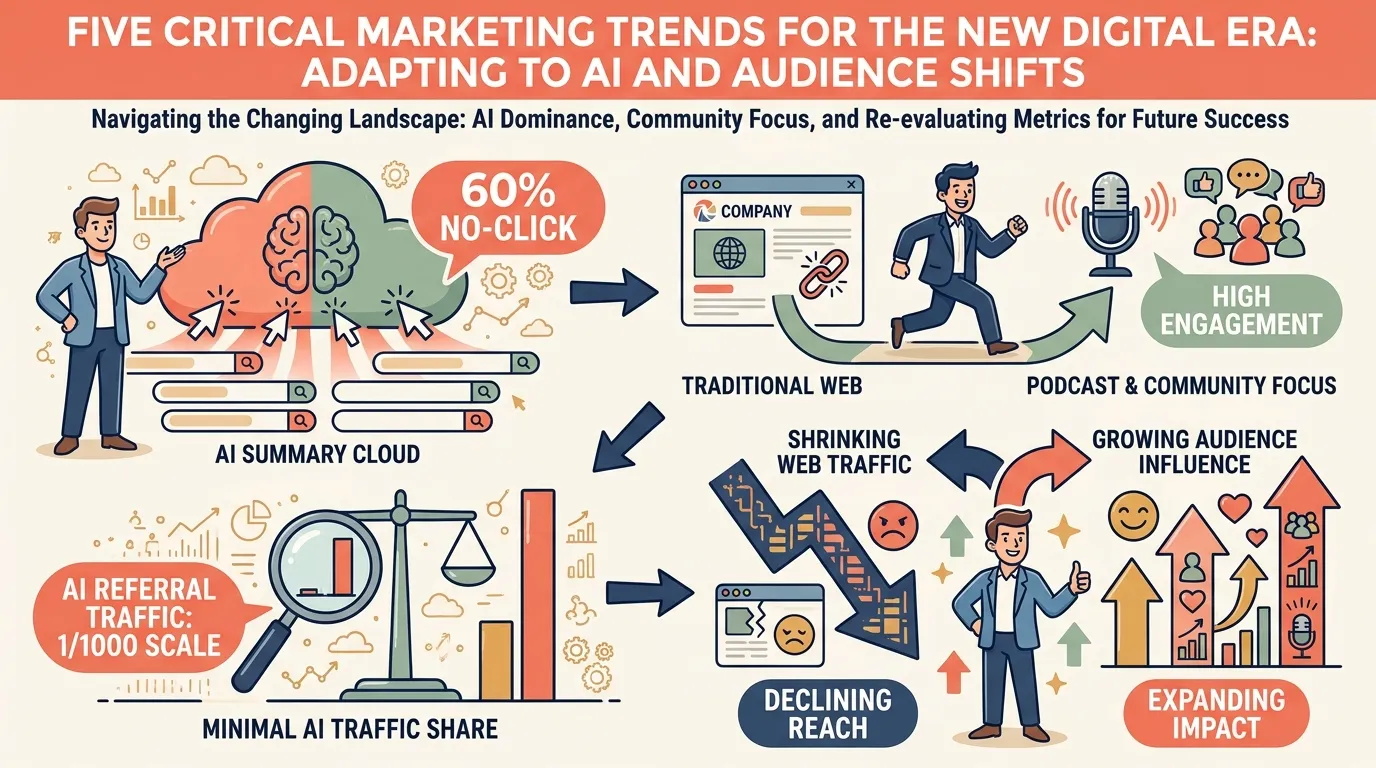
When Clicks Disappear: Five Marketing Trends Dominating 2026
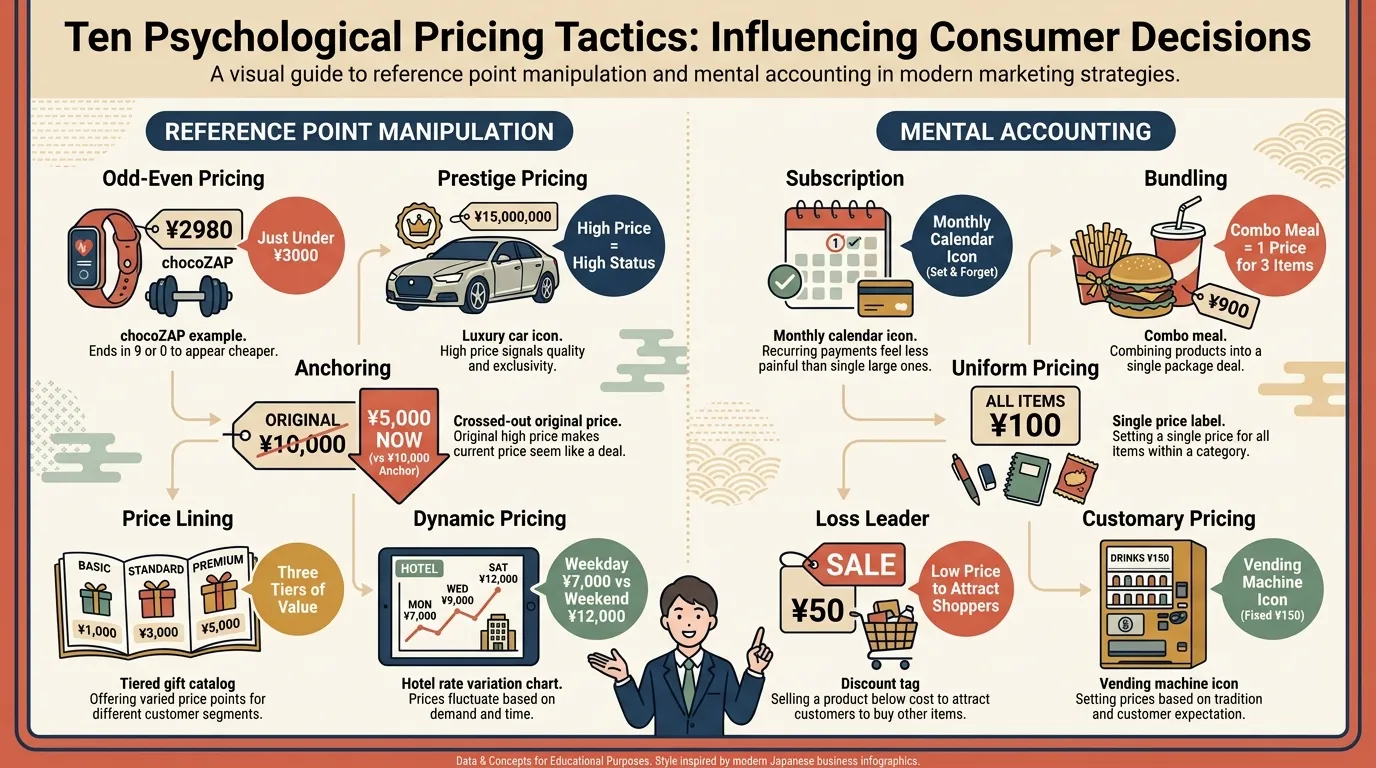
10 Psychological Pricing Techniques: How Reference Points Shape Purchase Decisions
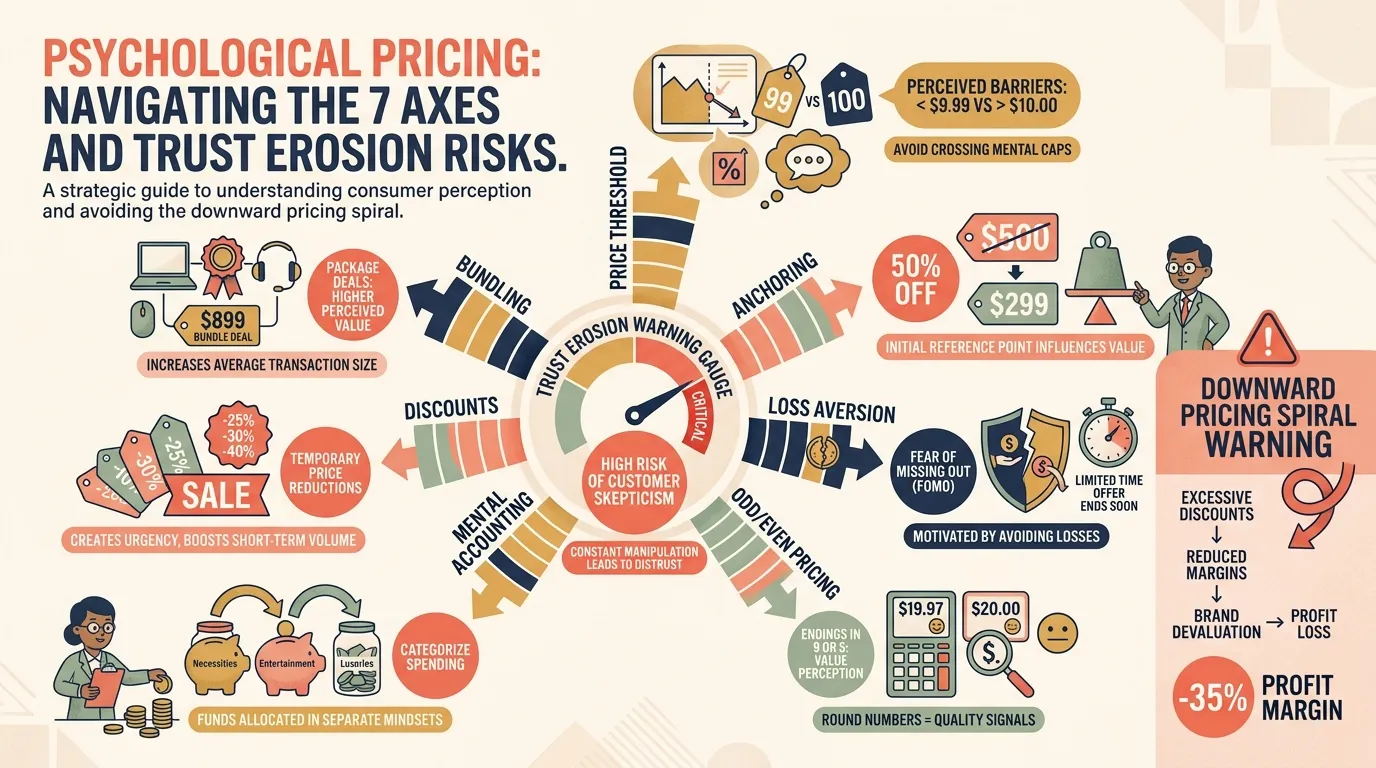
Seven Axes of Psychological Pricing and the Trust They Quietly Erode
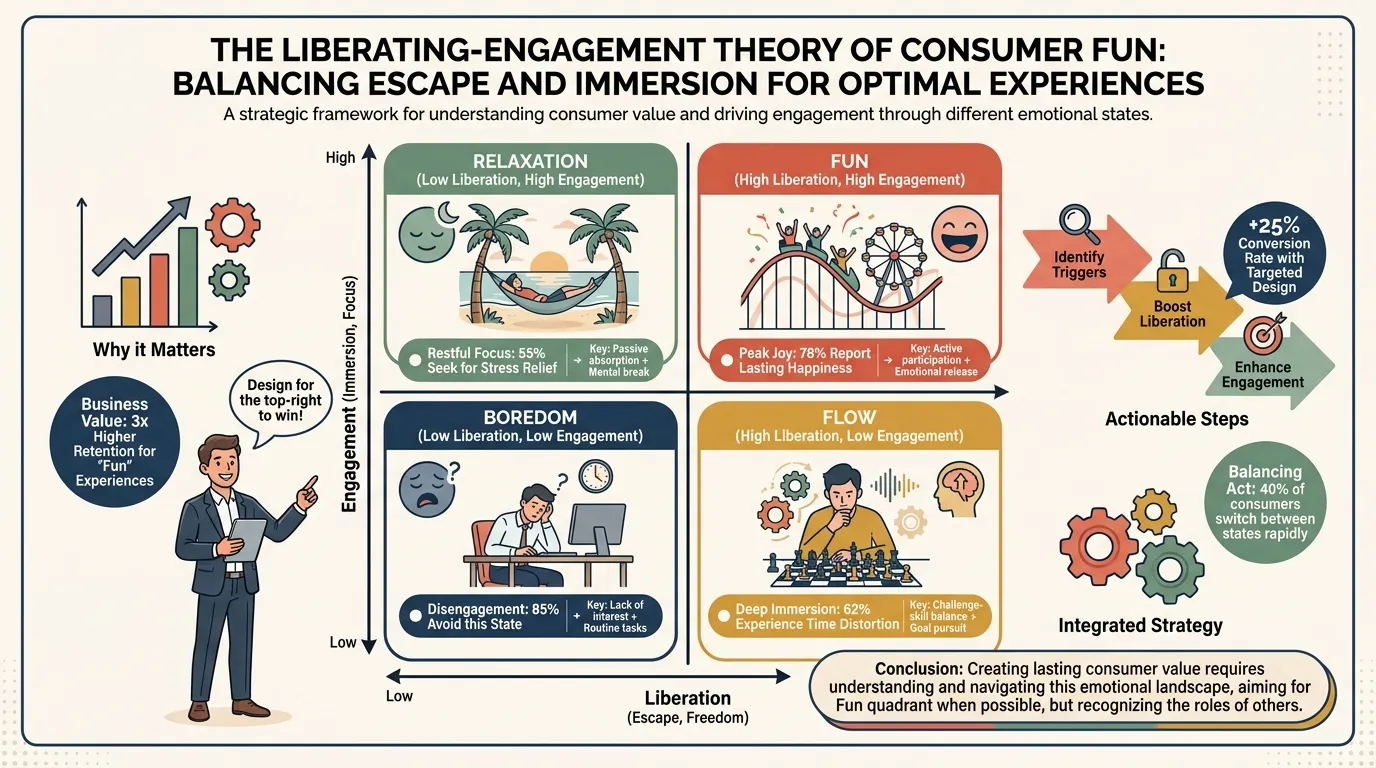
Why Some Experiences Feel Truly Fun