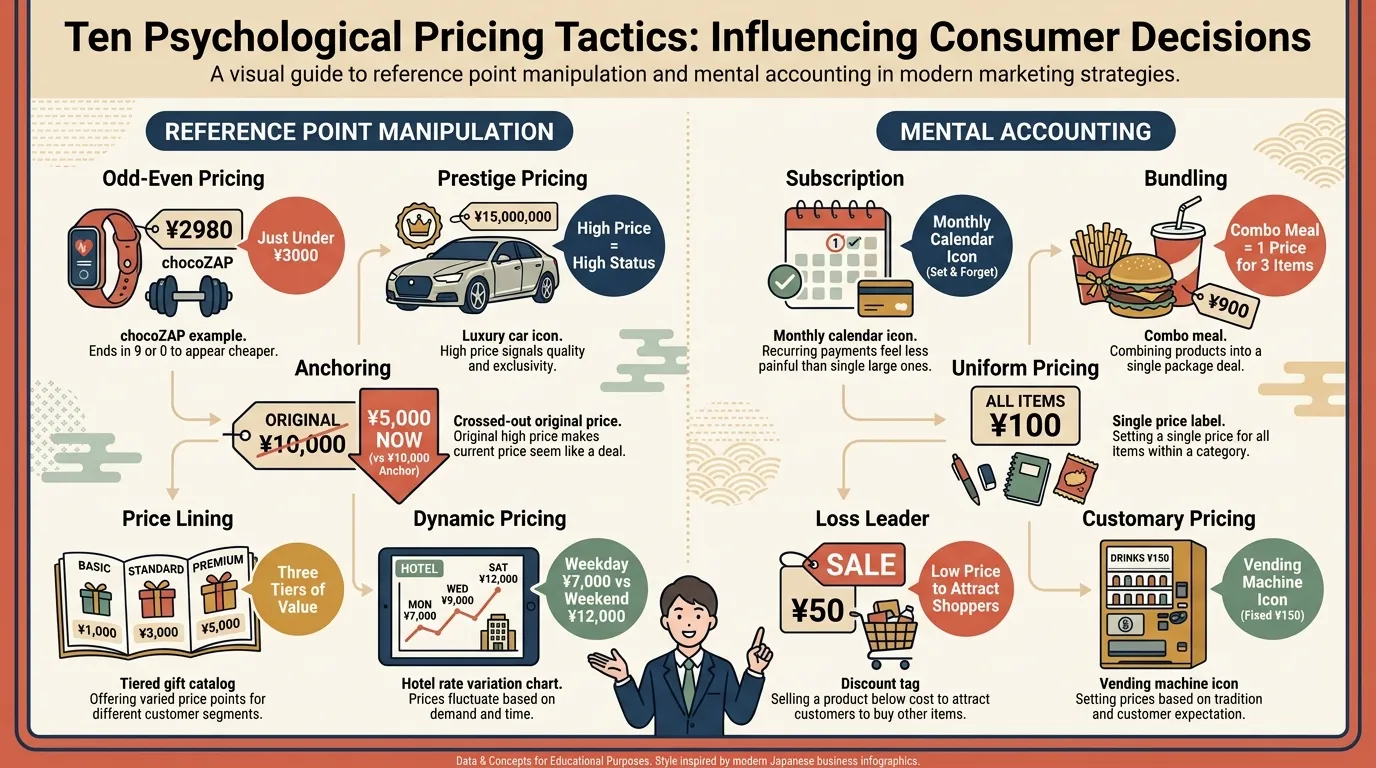
Why AI-Optimized Pricing Still Gets Profits Eaten by Consumer Psychology
More price granularity fires up loss aversion—here is why class pricing wins in the AI era
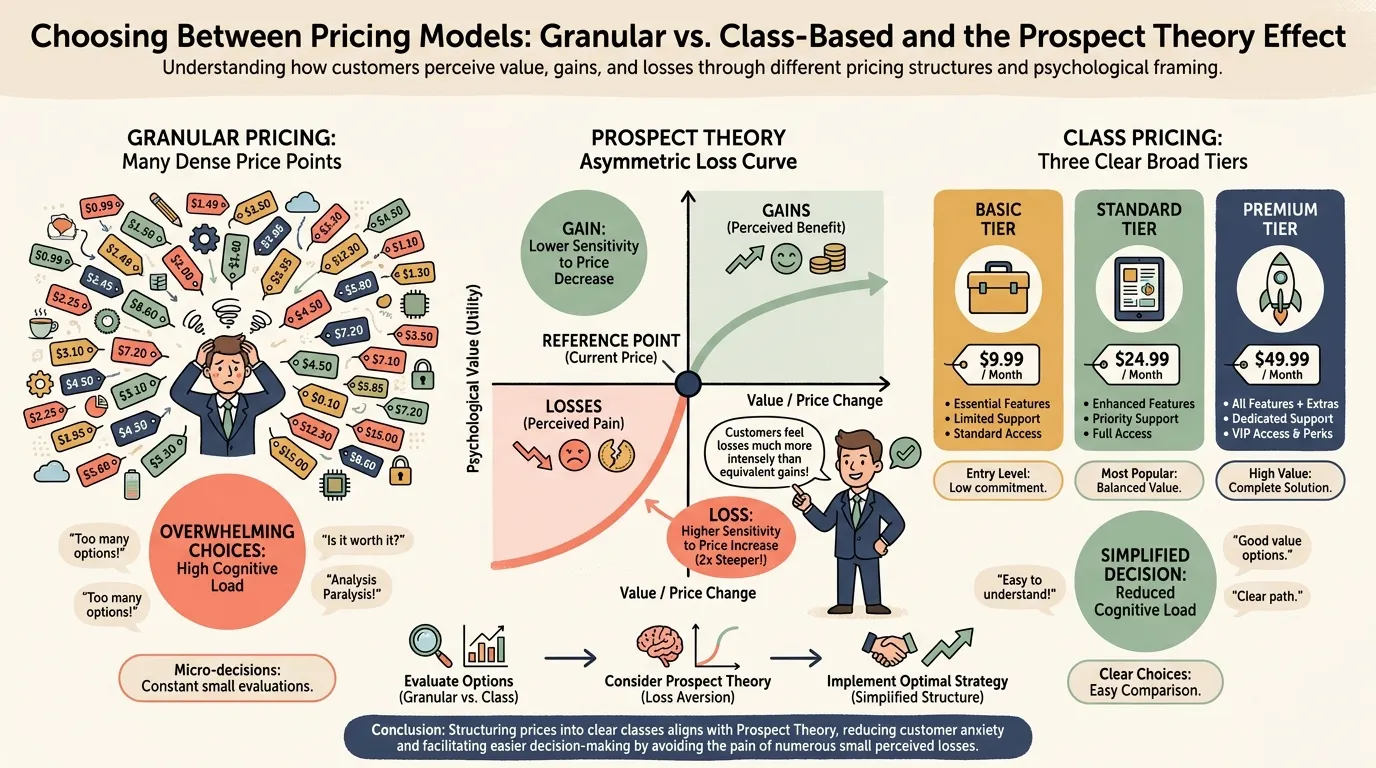
AI can now compute individually optimized prices in milliseconds. Yet in practice, draft beer menus stay at three tiers, supermarket shelves cluster a category into a handful of price points, and SaaS plans rarely exceed three options. Why, when granularity is technically possible, do businesses keep things simple?
Research by Zuhui Xiao, assistant professor at UW-Milwaukee’s Lubar College of Business, offers a precise behavioral economics answer. Her 2026 paper “Consumer-Driven Class Pricing” shows that finer pricing granularity does not automatically produce higher profits—and explains why.
How AI Optimization Triggers More Comparisons
Xiao’s core observation: the more price points a seller introduces, the more consumers automatically compare adjacent options. This is Reference Price formation at work. Put five wines on a shelf and shoppers evaluate each bottle relative to its neighbors. Offer a single price and that comparison never happens.
Granular Pricing gives buyers a richer set of options—but it also gives them more moments of comparison. Even when an AI assigns each individual the objectively best price for them, the moment that person sees other price points on the same screen or shelf, their optimal price lands inside a framework of relative gain and loss.
Why Granularity Triggers More Loss Aversion
This is where Loss Aversion asymmetry becomes the profit leak. Tversky and Kahneman’s Prospect Theory established that the loss function is roughly twice as steep as the gain function. Feeling that you overpaid registers about twice as heavily as feeling you got a deal.
As pricing granularity increases, consumers face more situations where they can imagine having chosen the slightly-more-expensive option by mistake.
More price granularity increases optimization precision while also multiplying the fuses that trigger loss aversion.
A shelf with ¥350 and ¥480 coffee creates one loss-imagination moment. A shelf with ¥350, ¥380, ¥420, ¥480, ¥520, and ¥580 creates five. Across a full store or product catalog, these micro-aversions accumulate into a measurable shift in purchase behavior—and a measurable drop in margin.
The “How Many Tiers” Post-Processing Layer
Xiao’s practical implication is direct: after an AI computes individually optimal prices, a deliberate post-processing decision is required—how many price classes should those outputs be rounded into?
Class Pricing is the strategy of deliberately bundling a range of products or contexts into a small number of price classes. A bar may carry thirty draft beers but present only two prices: regular and large. The variety is real; the reference-point structure is controlled.
The temptation to publish raw algorithmic output directly to a price page is strong. But Xiao concludes that “flexible pricing does not necessarily increase profit.” Imposing an explicit ceiling on the number of tiers after optimization can make the loss-aversion mechanism work for you rather than against you.
Reading It Back Through a SaaS Lens
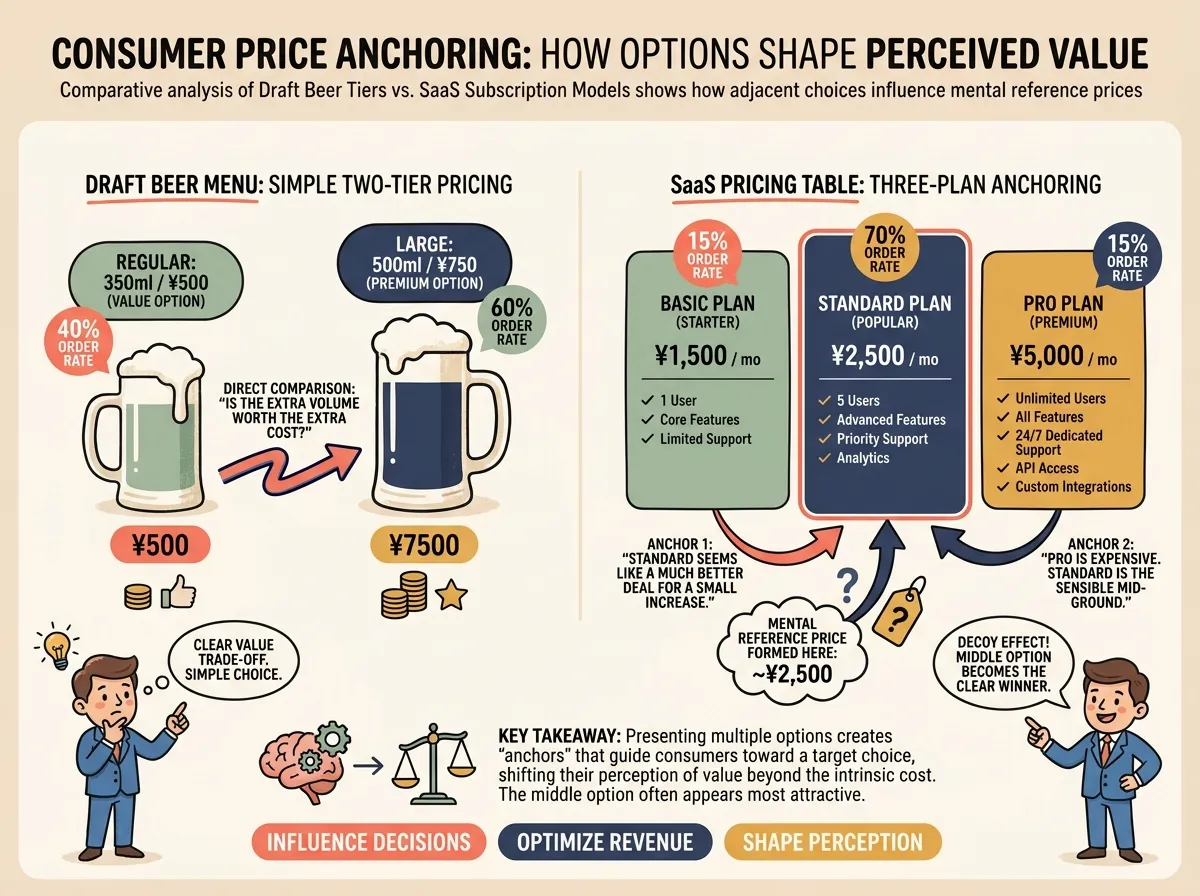
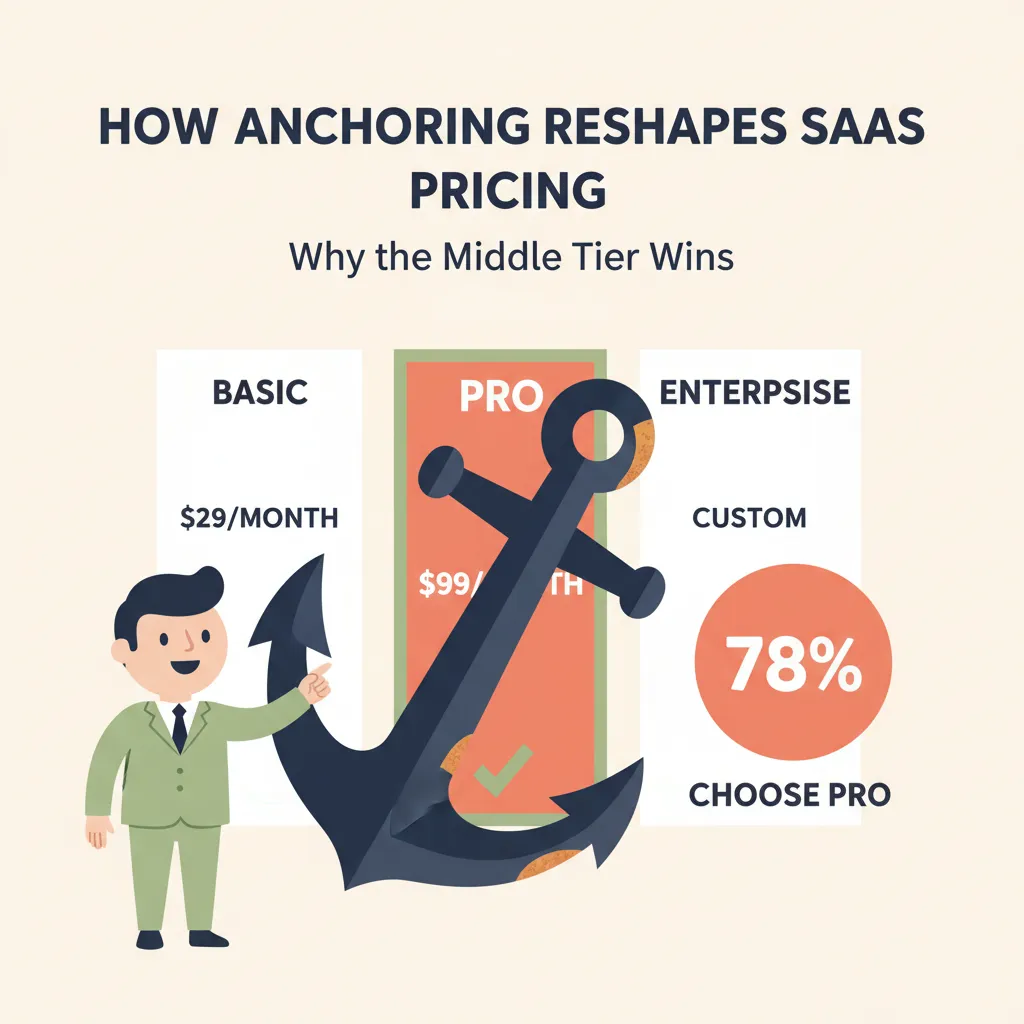
The classic three-plan SaaS layout—Starter / Pro / Enterprise—is a real-world application of class pricing. By constraining comparison to three anchors, it limits the “I chose the expensive one” imagination loops.
Expand to five or seven tiers and users start running detailed loss-calculus before upgrading. The same move that opens more upsell surface also widens the downgrade pull. That is the pricing paradox Xiao’s research makes legible.
The same principle applies to AI-driven renewal pricing in SaaS. Presenting a personalized renewal price via private channel (email, in-app notification seen only by that user) keeps the reference-point structure clean. The moment that price sits alongside other visible tiers in a shared UI, the margin-eroding mechanism described in the research kicks in.
Optimization Is Not Enough—Simplification Is the Last Step
AI sharpens the precision of price computation; it does not override the human tendency to benchmark any number against adjacent numbers and register the gap as a potential loss. That asymmetry is structural, not a bug that better algorithms will eventually patch.
The designer’s job is not to resist AI optimization but to treat “how many tiers to publish” as a first-class design decision that sits downstream of the algorithm. Controlling granularity after optimization is how you convert computational precision into actual profit.
Sources: Mirage News, “AI Eases Pricing, Consumer Psychology Cuts Profits” (2026)
Related Articles
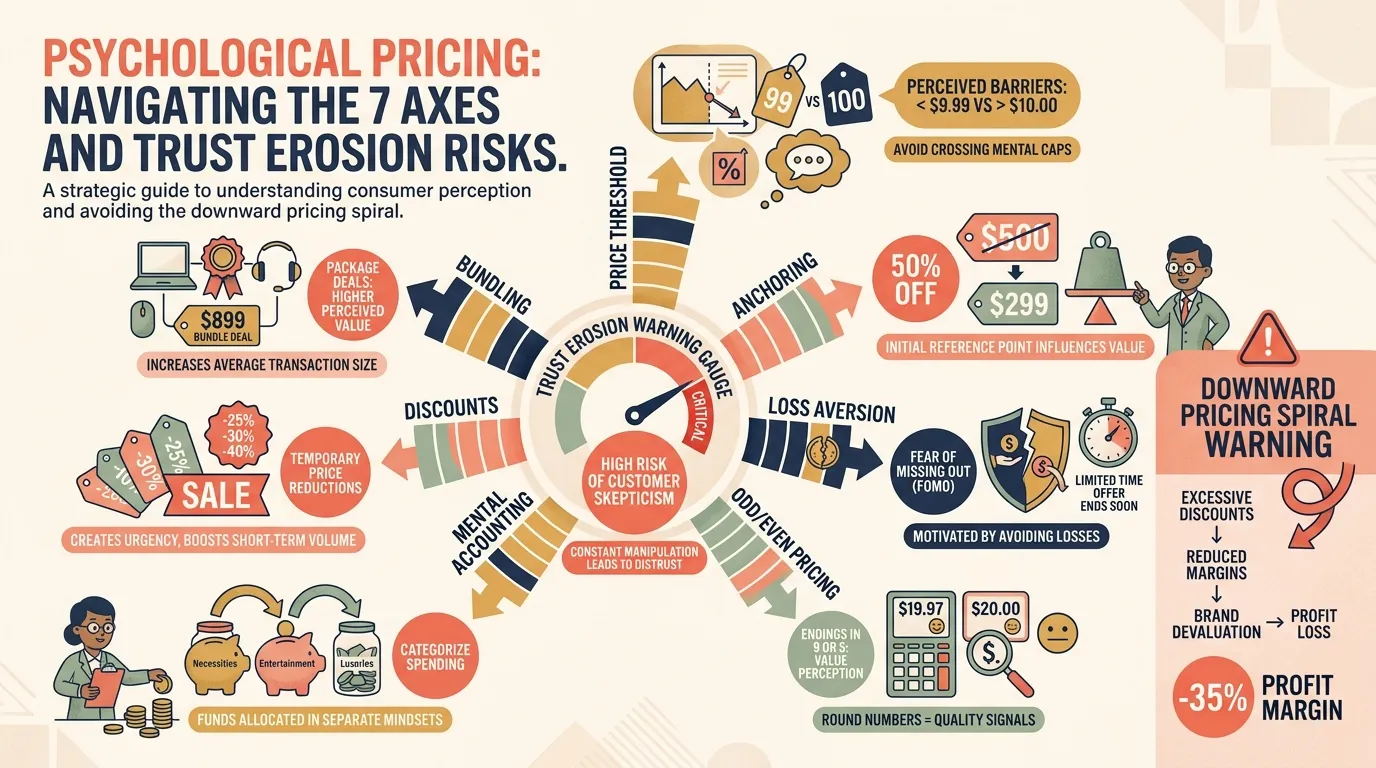
Seven Axes of Psychological Pricing and the Trust They Quietly Erode
Why Japanese Companies Keep Apologizing for Price Increases — and How Value-Based Pricing Fixes It
How Anchoring Quietly Shapes SaaS Pricing
"I Hate It" — Yet I Keep Buying: The Behavioral Economics of Random Merchandise
When Clicks Disappear: Five Marketing Trends Dominating 2026