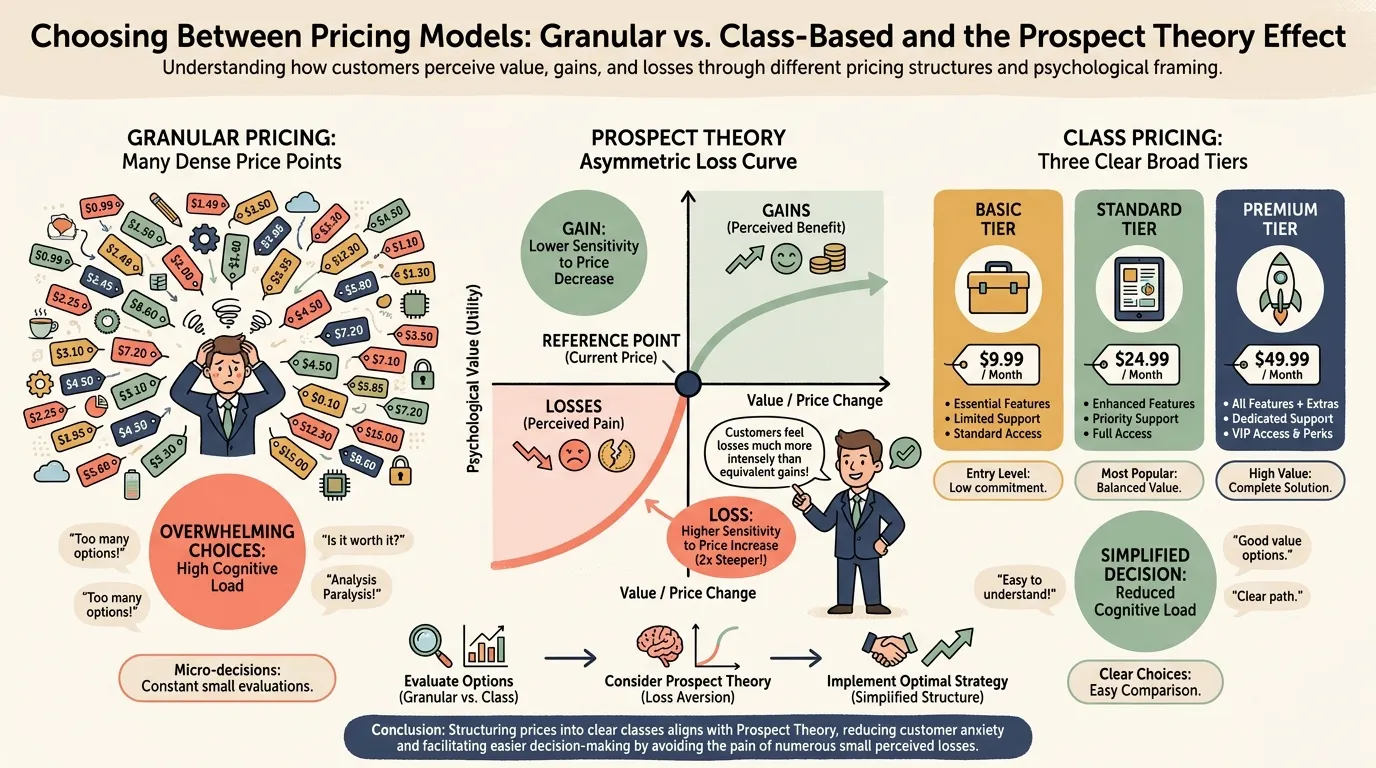
When Clicks Disappear: Five Marketing Trends Dominating 2026
AI summaries are answering before users click. Here is what that means for brand strategy.
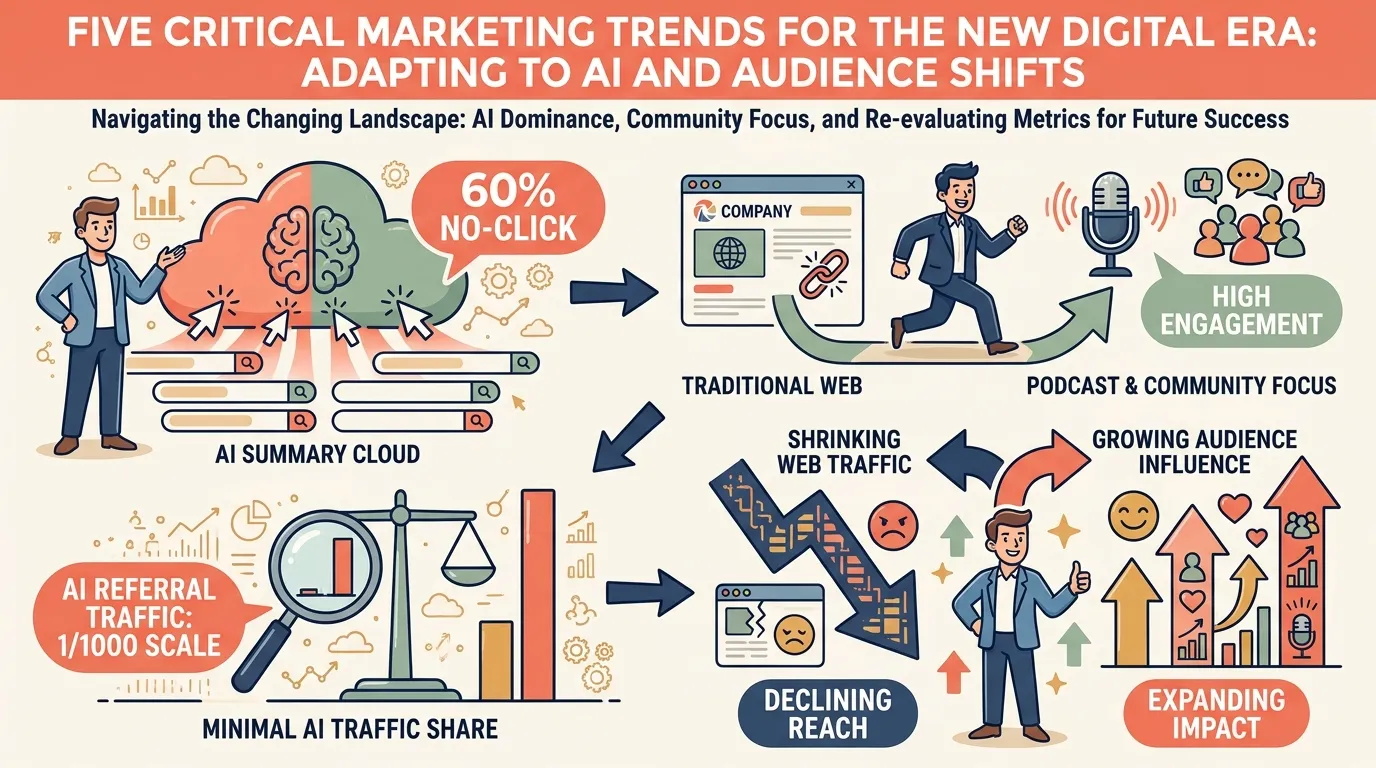
A single number tells the story of search in 2026: in the EU, only 374 out of every 1,000 searches produce a click to an external website. Nearly 60% end without one. Rand Fishkin of SparkToro framed this landscape as five dominant trends — a map of where attention is going and what brands should do about it.
The Five Trends at a Glance
- AI Summary Explosion — Content consumed via AI Search Overview is growing 10× faster than content read in full on publisher pages
- B2B Web Exodus — Only 28% of B2B marketers read web content in 2025; the rest migrated to podcasts, LinkedIn video, and communities
- Zero-Click Search as the New Normal — In the EU, ~60% of searches end without a click; the trend is global
- The AI Traffic Myth — Actual site referrals from AI tools are roughly 1/1,000th of what press coverage implies
- Social-Search Convergence — Over one-third of U.S. search results now surface an AI overview before any organic link
These five are not separate phenomena. They are cross-sections of a single shift: systems designed so that user intent resolves before a click is needed.
Zero-Click Search: The Structural Disappearance of Clicks
Zero-Click Search is not new — it predates generative AI. What AI summaries did was accelerate it and make the data impossible to ignore.
The root cause is cognitive: users do not want “better information,” they want “good-enough information at minimum cost.” This satisficing strategy is a basic finding of decision science, and AI Search Overview satisfies it perfectly — while stripping brands of the chance to differentiate on the page users never reach.
For content teams whose scorecards are built on traffic, the EU’s 374-per-1,000 figure is not an anomaly. It is a preview.
The Attention Economy and B2B’s Channel Migration
The 28% web-readership figure is not evidence that B2B audiences have stopped consuming information. They have migrated to lean-back media: podcasts on commutes, LinkedIn video during lunch, Slack communities late at night.
Attention Economy logic makes this migration predictable. When information supply expands exponentially but human attention stays fixed, audiences optimize their portfolio of consumption modes. “Reading” loses share to “listening” and “watching.”
The strategic implication is not to lament the decline of blog readership but to ask where your audience’s attention actually is — and build presence there.
The AI Traffic Myth: 1/1,000
Fishkin’s “AI traffic myth” names the gap between press coverage of AI referrals and actual referral data. The real figure is approximately one-thousandth of the implied number.
The consequence is a misallocated content bet. Teams that spent 2025 optimizing for AI-driven traffic discovered their analytics disagreed with their thesis. The corrective reframe: getting cited inside an AI response is a different game from getting clicked through.
Zero-Click Marketing as the Strategic Response
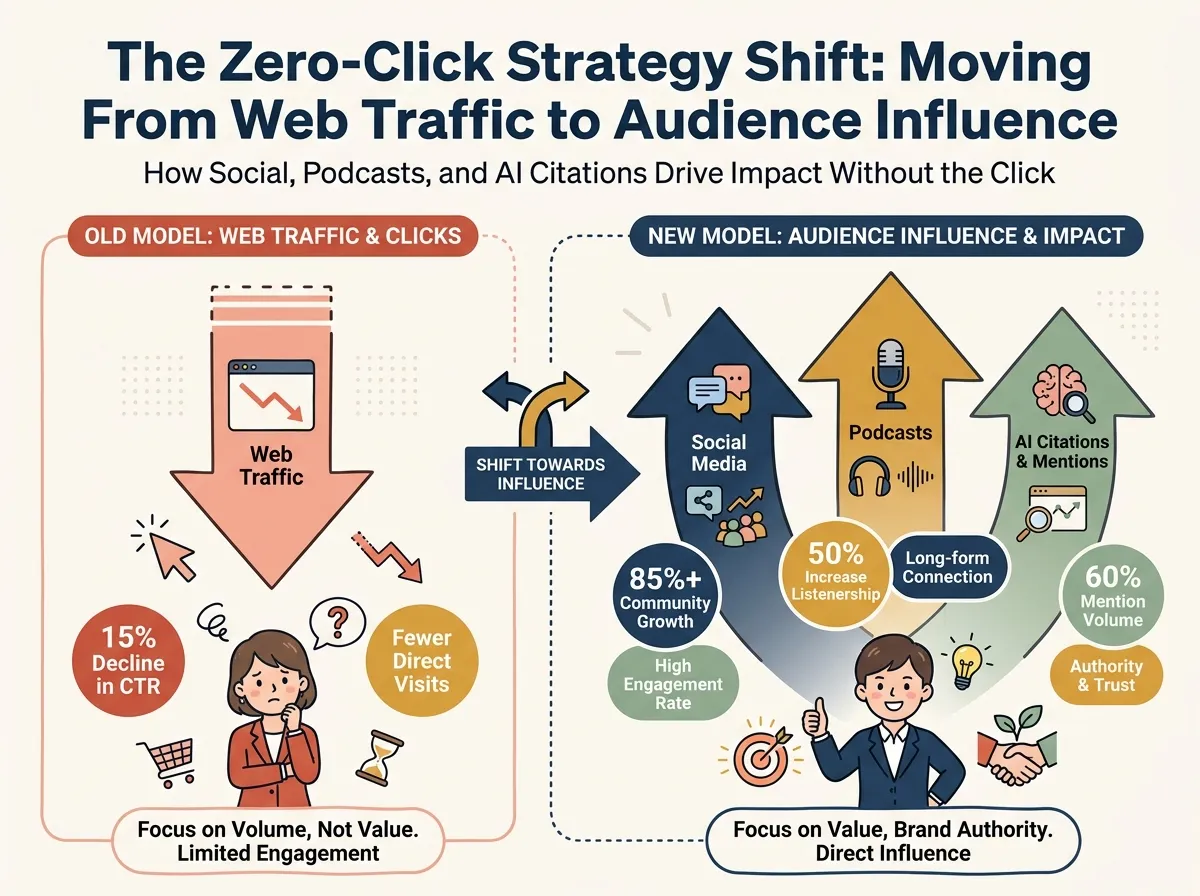
Fishkin’s prescription is direct: shift from maximizing web traffic to maximizing influence over your audience.
Zero-Click Marketing means building brand presence that does not depend on a click as its delivery mechanism. Social media authority, podcast positioning, community trust — none of these register in a GA4 session count, but all of them shape purchase decisions before a search query is ever typed.
The end of SEO-optimized content production is not the conclusion here. The conclusion is that content without a click as its endpoint now carries more relative value than it did before. The metrics to watch are changing. The teams that update their scorecards first will move faster when the landscape settles.
Sources: SparkToro, “The 5 Big Trends that Will Dominate Marketing in 2026” (Rand Fishkin, 2026)
Related Articles
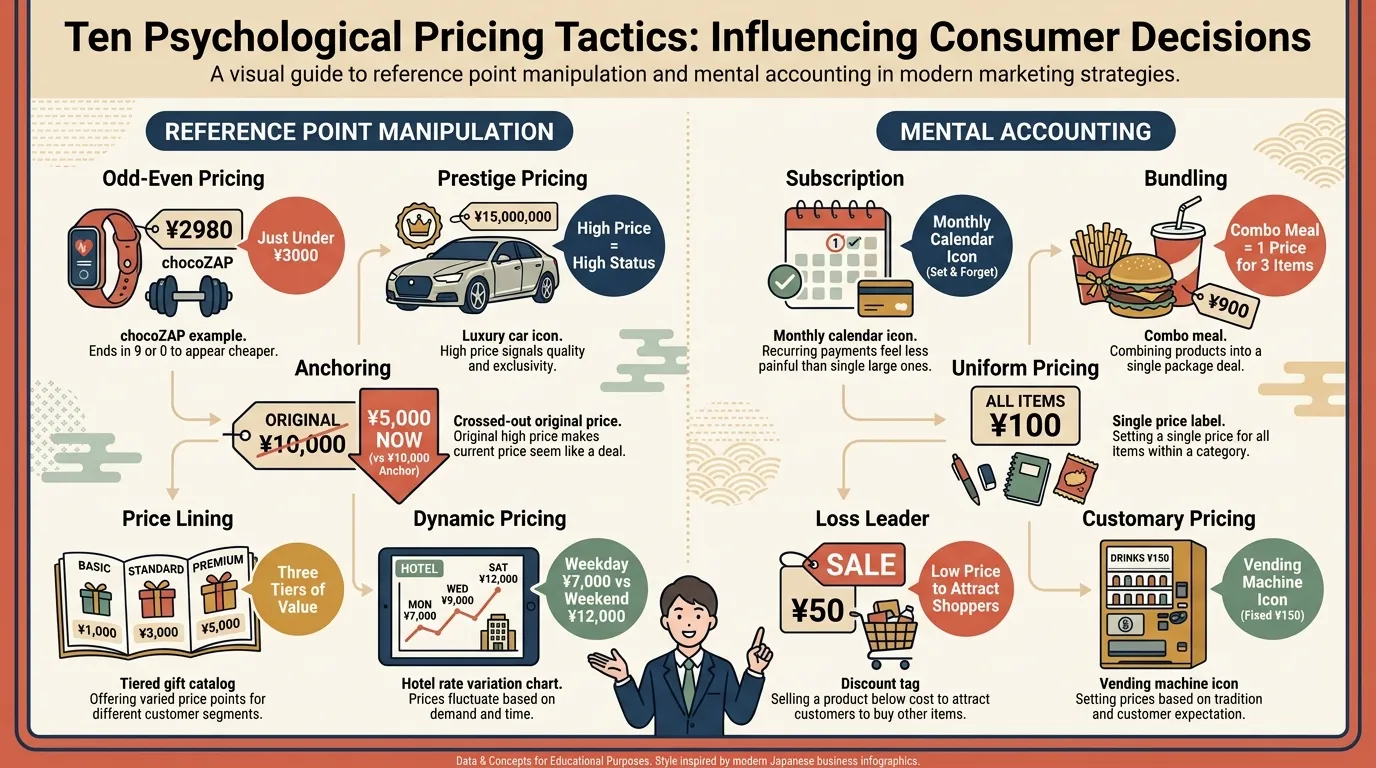
10 Psychological Pricing Techniques: How Reference Points Shape Purchase Decisions
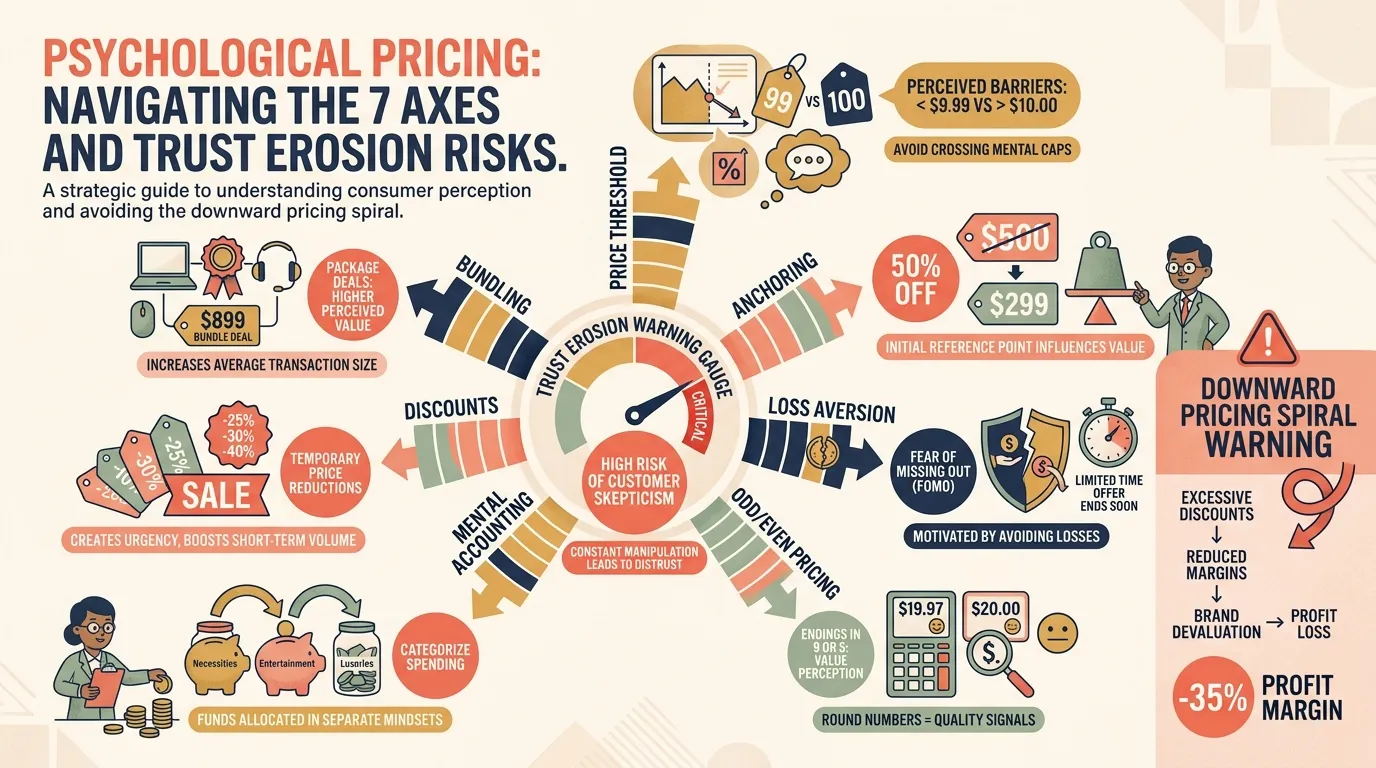
Seven Axes of Psychological Pricing and the Trust They Quietly Erode
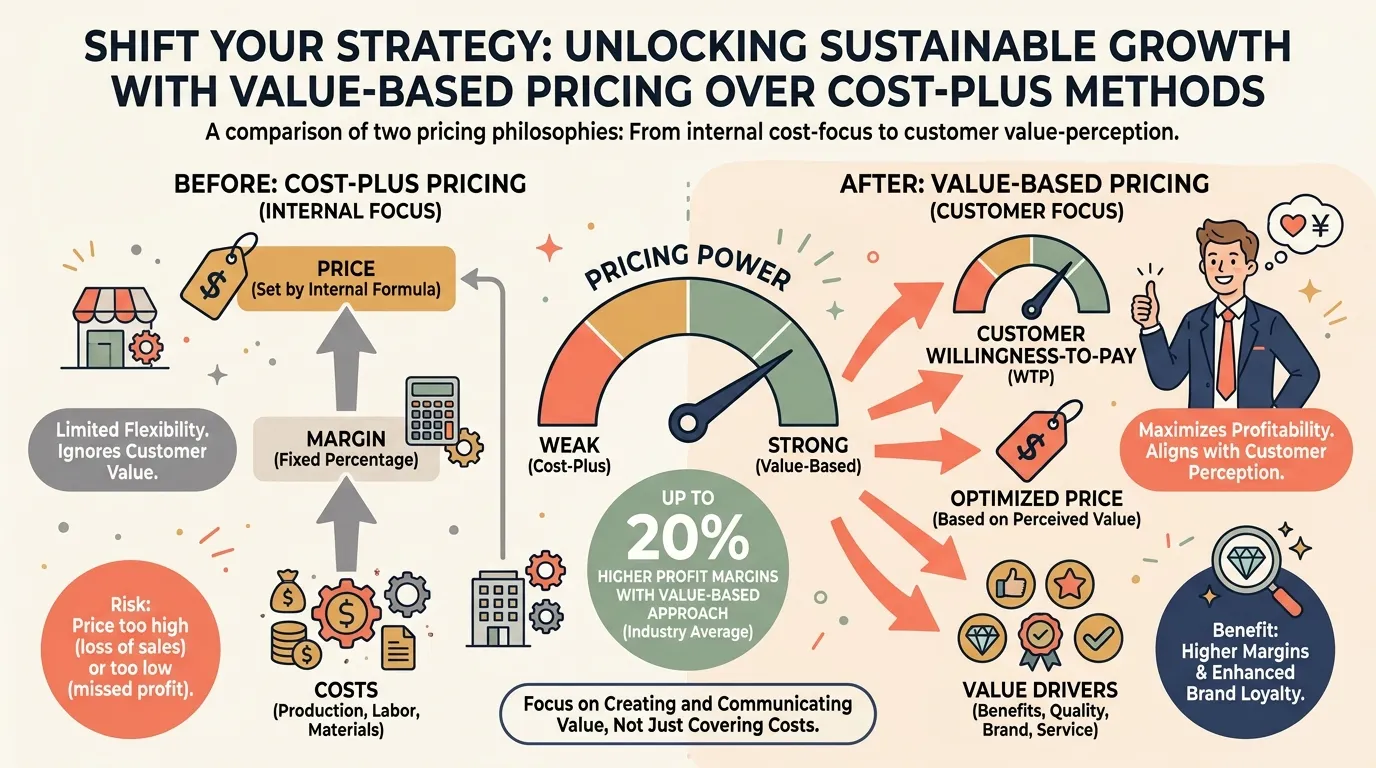
Why Japanese Companies Keep Apologizing for Price Increases — and How Value-Based Pricing Fixes It
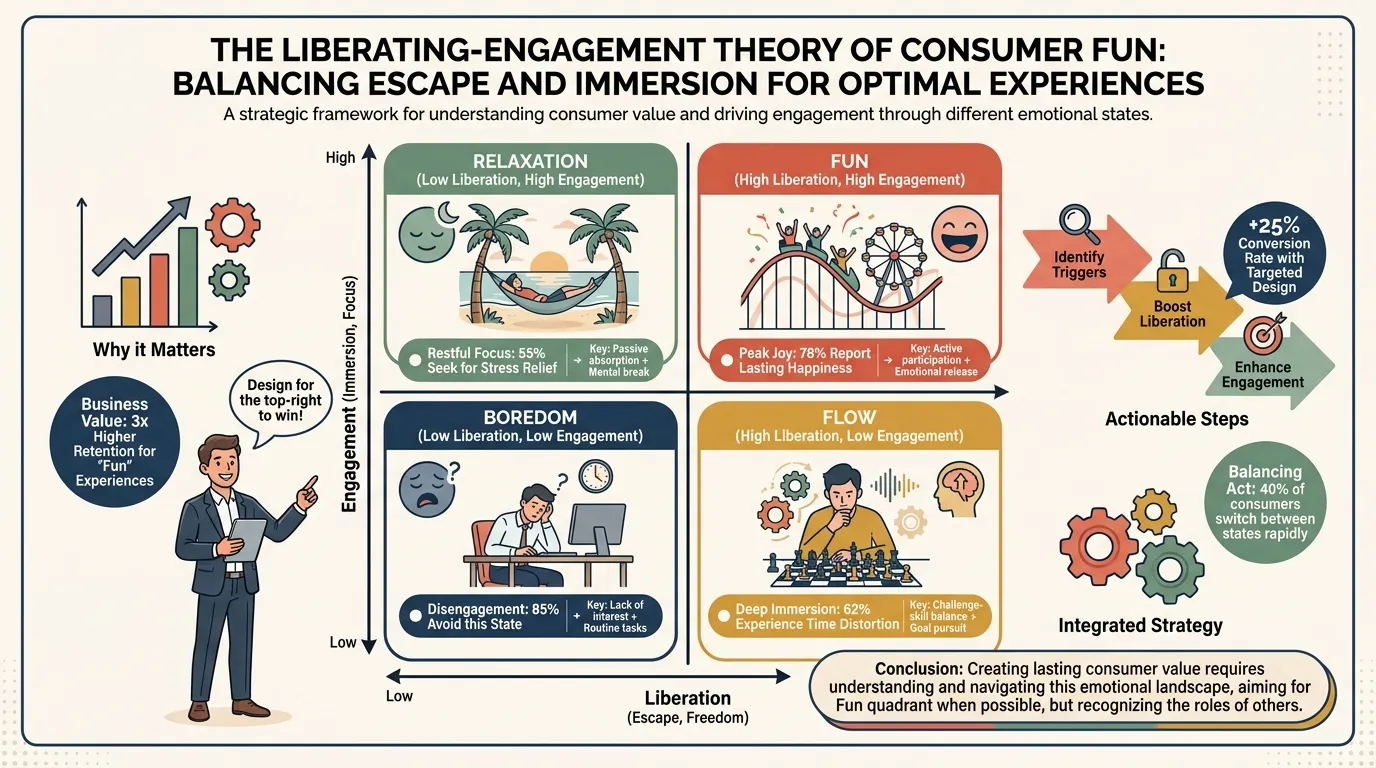
Why Some Experiences Feel Truly Fun
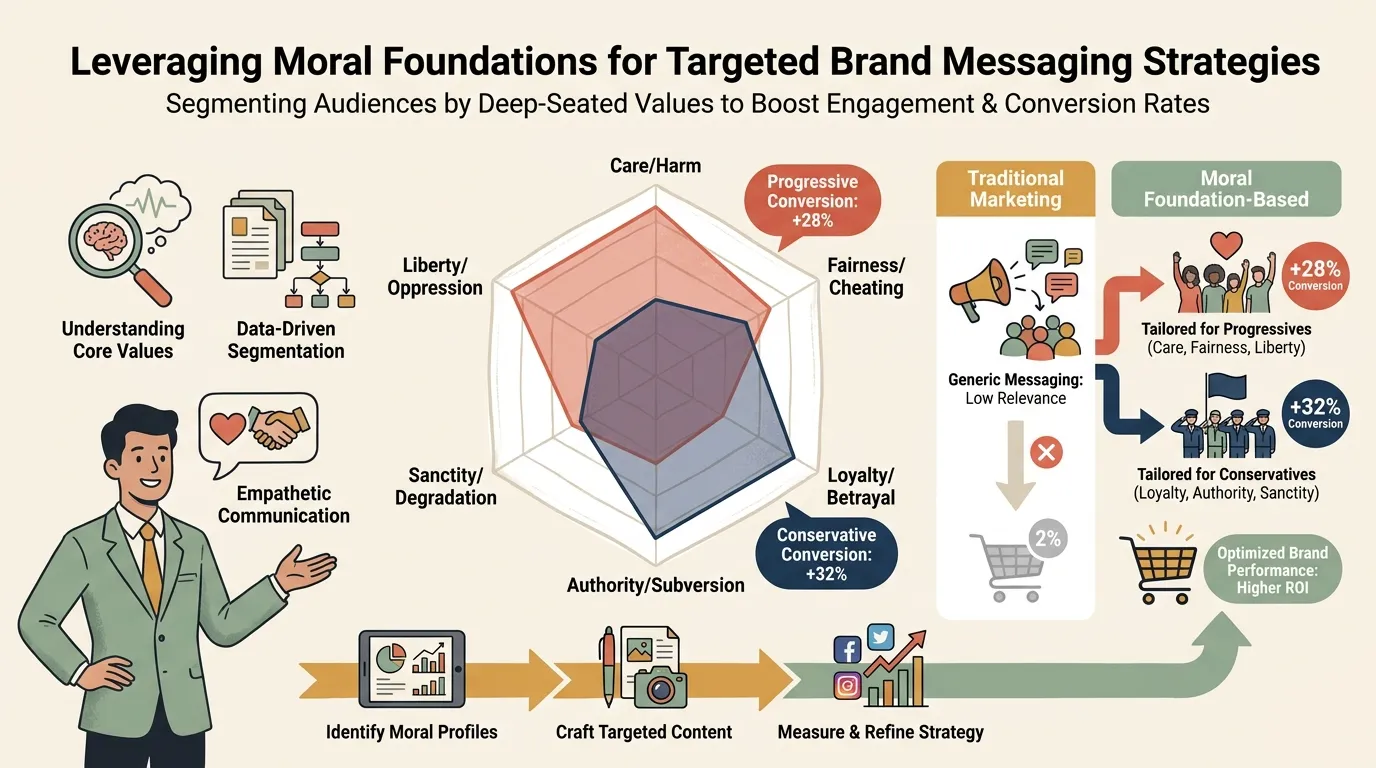
Moral Foundations Shape How Brands Are Chosen