The Psychology of Permission: How Uniform-Price Corners Trigger Impulse Buying
Mental accounting, goal-gradient, and loss aversion conspire to empty your cart
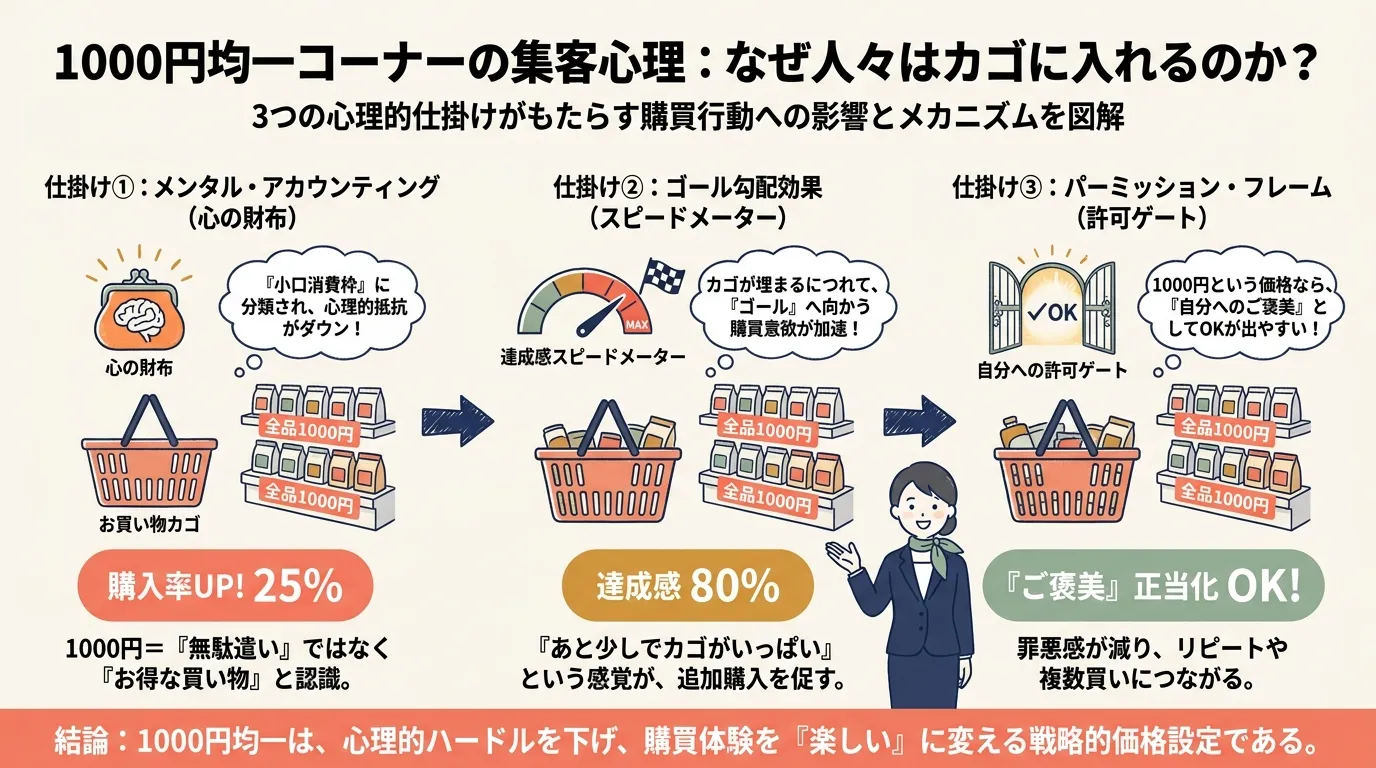
Walk into any Japanese discount shop or supermarket and you will almost certainly find a “¥1,000 flat-price corner.” These sections are not a promotional afterthought. They are a precision instrument built from three interlocking behavioral-economics mechanisms: Mental Accounting, the Goal-Gradient Effect, and the permission frame. Together they redirect a shopper’s decision-making from “do I need this?” to “how do I spend what’s left?”
What Mental Accounting Does to a Shopper
Richard Thaler’s theory of Mental Accounting holds that people do not treat money as fully fungible. Instead, they mentally assign funds to separate “accounts”—entertainment, groceries, gifts—and regulate spending against each account’s implicit budget.
A uniform-price corner exploits this tendency by triggering a dedicated sub-account. The moment a shopper steps in front of a ¥1,000 flat shelf, the framing of available money shifts. A portion of the wallet is mentally labeled “¥1,000 flat section money,” separate from the main grocery budget. Spending from that sub-account does not feel like depleting savings; it feels like using designated funds—precisely as intended.
This is the same mechanism that makes gift cards so profitable for retailers. Recipients treat the card’s balance as a distinct mental account, spend it more freely than equivalent cash, and often exceed the card value. The uniform-price corner achieves the same psychological effect without issuing any card at all.
The Goal-Gradient Acceleration
Once a shopper has implicitly committed a budget to the uniform section, the Goal-Gradient Effect kicks in. First documented by Clark Hull in rats navigating a maze, the goal-gradient effect describes how motivation increases as an agent approaches a defined goal. In retail, the “goal” is budget exhaustion.
With ¥700 mentally allocated and ¥300 already spent, the remaining ¥700 exerts a specific gravity. “I have ¥700 left in this section” is subtly experienced as “I’m not done yet.” As the balance shrinks toward zero, the pull toward completion intensifies. Shoppers who initially intended to buy one item often leave with three or four, accelerating purchases in the final stretch of the mental budget.
This sprint dynamic is observable in loyalty programs (points accumulate faster near redemption thresholds), in progress bars on e-commerce checkout pages, and in subscription products that front-load usage milestones. In every case, proximity to the goal amplifies motivation.
The Permission Frame and the Disappearance of Guilt
Impulse purchases normally carry a tax: guilt. The thought “I didn’t need this” is the psychological fee that inhibits repeat behavior. The uniform-price corner suppresses this tax through what behavioral economists call a permission frame.
A permission frame is a context that signals “this kind of spending is appropriate here.” The ¥1,000 uniform price communicates several things implicitly: the item is reasonably priced, the retailer has pre-approved the purchase by featuring it, and spending within this section is the expected behavior. Shoppers unconsciously absorb these signals and lower their guilt threshold. A ¥980 item in the general aisle might prompt hesitation; the same item in the flat-price section clears the bar with almost no friction.
The relationship to Loss Aversion is paradoxical but critical. Normally, Loss Aversion inhibits spending—potential loss of money feels worse than equivalent gain. Inside the uniform-price frame, however, the Thalerian “integration” effect inverts this. The unspent budget balance is reframed as a forgone gain rather than a saved resource. Leaving ¥300 “unused” starts to feel like losing ¥300, nudging the shopper toward full expenditure.
Why Retailers Keep the Section Permanent
Behavioral loops require consistent environmental triggers. The uniform-price corner trains shoppers over repeated visits: “when I enter this section, I spend ¥1,000.” Remove the section and the loop breaks. Retailers who have discontinued uniform-price corners often report measurable drops in repeat visits and average basket size—not because the items were uniquely valuable, but because the behavioral groove had been worn in over time.
The permanence also supports Impulse Buying at a systemic level. A one-time promotional corner is a novelty; a permanent fixture becomes a habit anchor. Shoppers begin planning visits around it, arriving with the mental budget already allocated.
Applications Beyond Retail
The three-mechanism stack—Mental Accounting sub-account, Goal-Gradient Effect acceleration, permission frame—appears throughout digital commerce:
E-commerce free shipping thresholds: “Free shipping on orders over ¥3,000” creates a mental sub-account sized at ¥3,000. Shoppers already at ¥2,400 experience strong goal-gradient pull to add ¥600 more. The threshold is the permission frame: spending to reach it is explicitly endorsed.
SaaS flat monthly plans: Offering a single ¥9,800/month unlimited plan (rather than usage-based billing) creates a mental account of ¥9,800 that the customer feels licensed to “use up” via full feature engagement. Feature adoption rates correlate with perceived budget utilization.
Bundle pricing: A ¥4,980 bundle for five items positions each item at roughly ¥996—below a psychological ¥1,000 threshold—while the total triggers a mental account large enough that buying all five feels like completion, not excess.
The Risks: Price Ceiling and Reduced Sensitivity
The permission frame has a shadow side. Setting a uniform price establishes a ceiling as much as a floor. Shoppers who buy repeatedly from a ¥1,000 section develop a reference price of ¥1,000 for that category of goods. Introducing a ¥1,500 item in the same zone breaks the frame and risks disappointment or distrust.
Similarly, Loss Aversion suppression is conditional on the frame remaining intact. If the uniform section becomes too large, or if items vary widely in perceived value, the homogenizing effect dilutes and shoppers begin re-engaging their normal evaluation process. The magic depends on maintaining the coherence of the permission frame.
Designing Your Own Permission Frame
For marketers and product designers, the actionable question is: where can I create a bounded mental account that pre-authorizes a spending level, installs a goal that shoppers want to complete, and suppresses the guilt tax on incremental purchases?
The answer rarely requires a physical corner. A digital “Starter Pack” at a flat price, a “points you can use this week” counter, or a cart-level savings summary (“You’ve saved ¥800 today”) each performs a version of the same job: it defines a frame, installs a goal, and makes spending within the frame feel right.
Understanding why the ¥1,000 flat section works is the first step toward replicating its behavioral architecture in any price-sensitive context.
Sources: なぜディスカウントショップやスーパーでは「1000円均一コーナー」が常設されているのか? — Diamond Online, 2026; Mental Accounting Matters — Thaler, 1999, Journal of Behavioral Decision Making; The Goal-Gradient Hypothesis Resurrected — Kivetz et al., 2006, Journal of Marketing Research
Related Articles
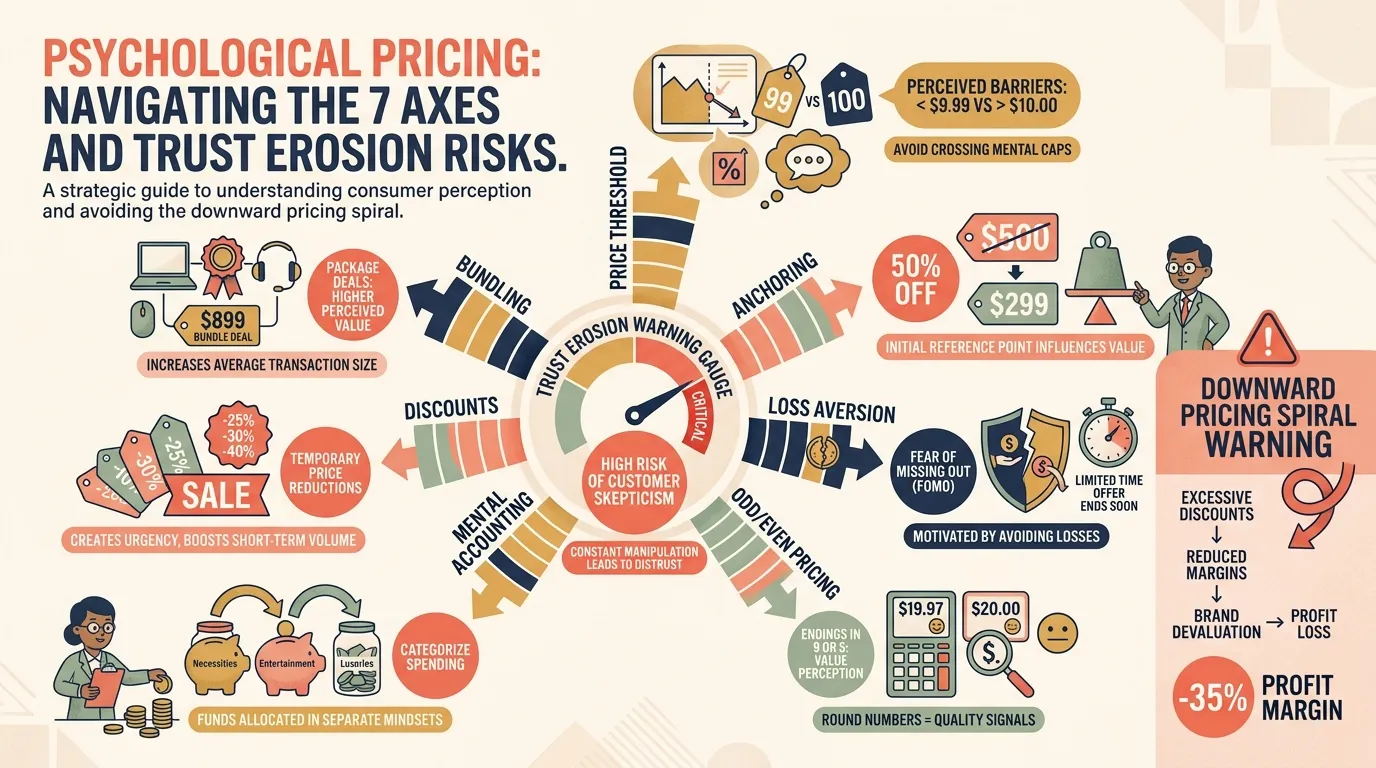
Seven Axes of Psychological Pricing and the Trust They Quietly Erode
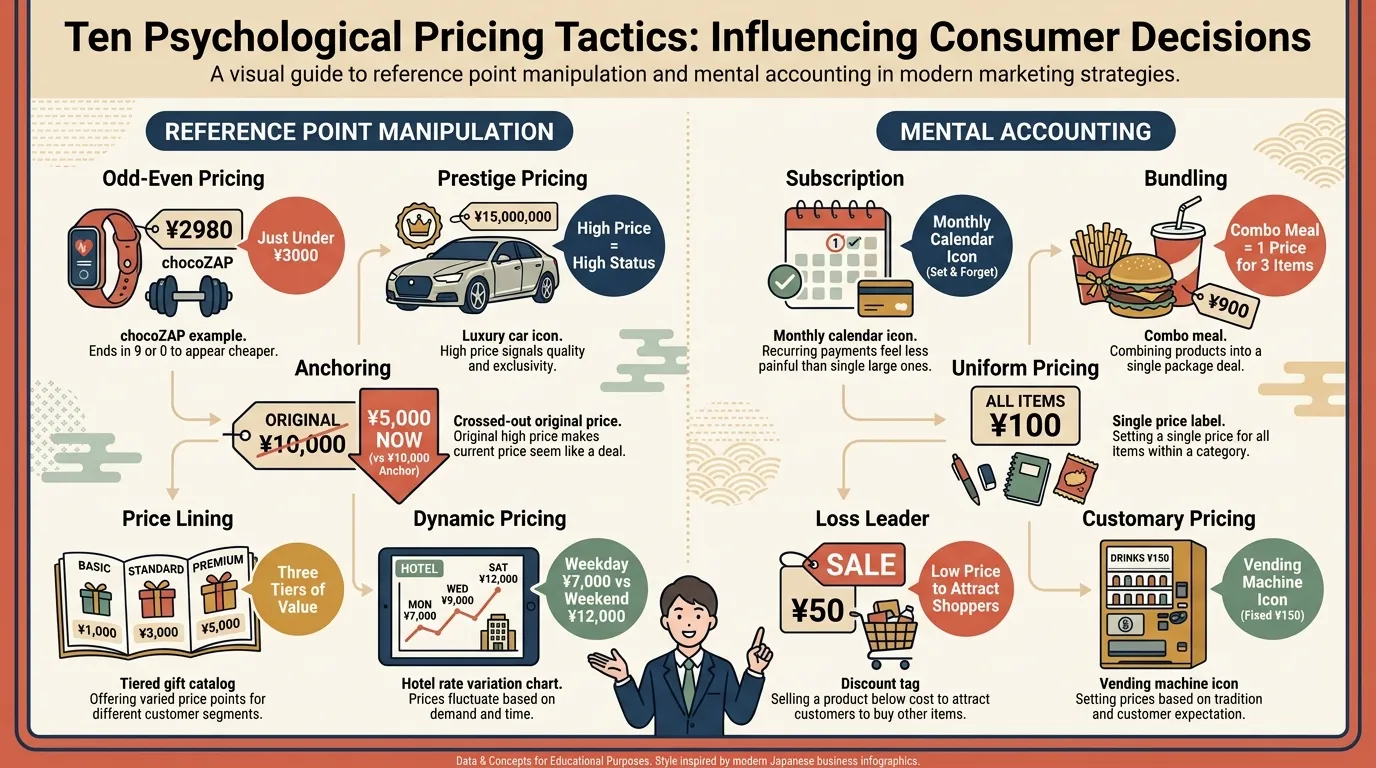
10 Psychological Pricing Techniques: How Reference Points Shape Purchase Decisions
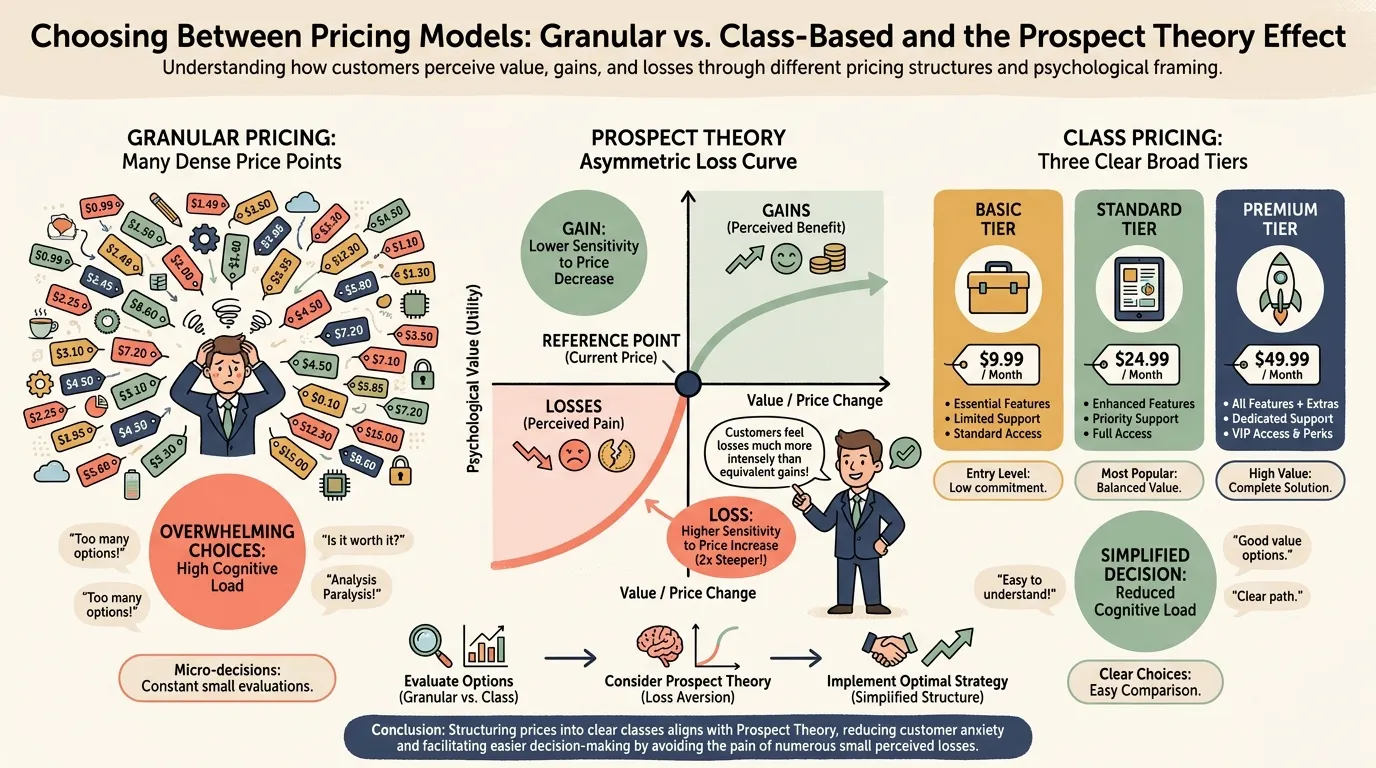
Why AI-Optimized Pricing Still Gets Profits Eaten by Consumer Psychology
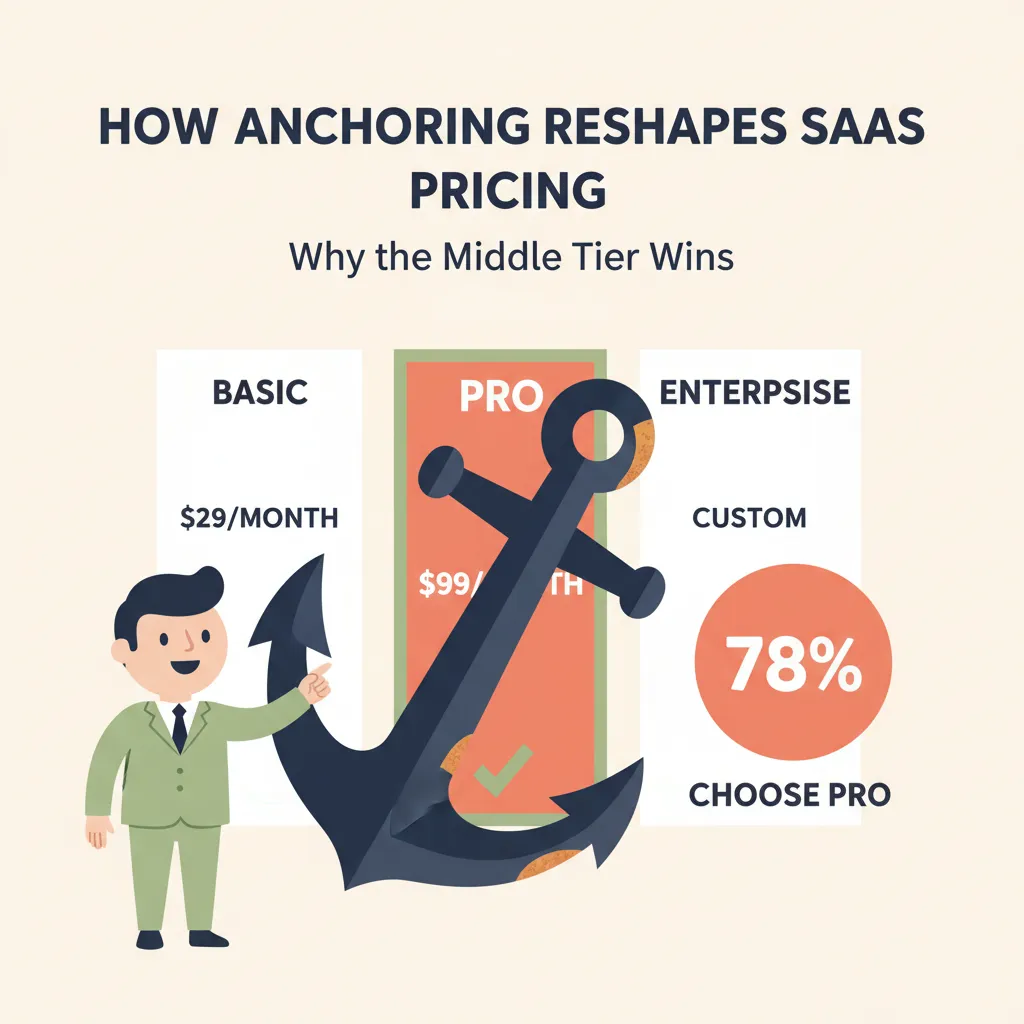
How Anchoring Quietly Shapes SaaS Pricing
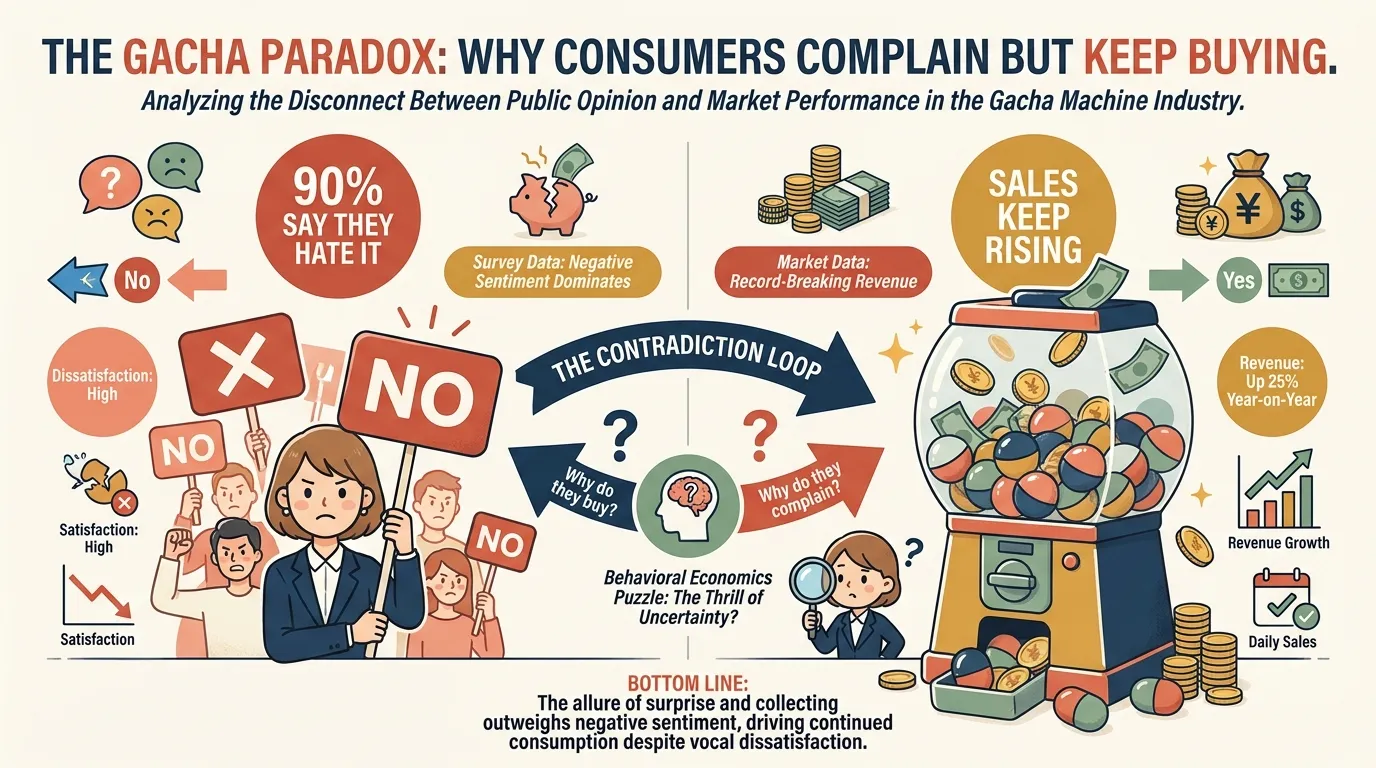
"I Hate It" — Yet I Keep Buying: The Behavioral Economics of Random Merchandise