Moral Foundations Shape How Brands Are Chosen
The same product resonates differently depending on which of six moral axes you activate
Why does a sustainability message resonate deeply with some consumers while leaving others entirely unmoved — even when the product is identical? Rewording alone doesn’t fix it. The answer lies in the moral architecture each consumer carries.
Buying Decisions Are Often Moral Decisions
Ramos, Johnson, VanEpps, and Graham published “When consumer decisions are moral decisions” on SSRN, applying Jonathan Haidt’s Moral Foundations Theory to consumer psychology in the most systematic way the field had yet seen.
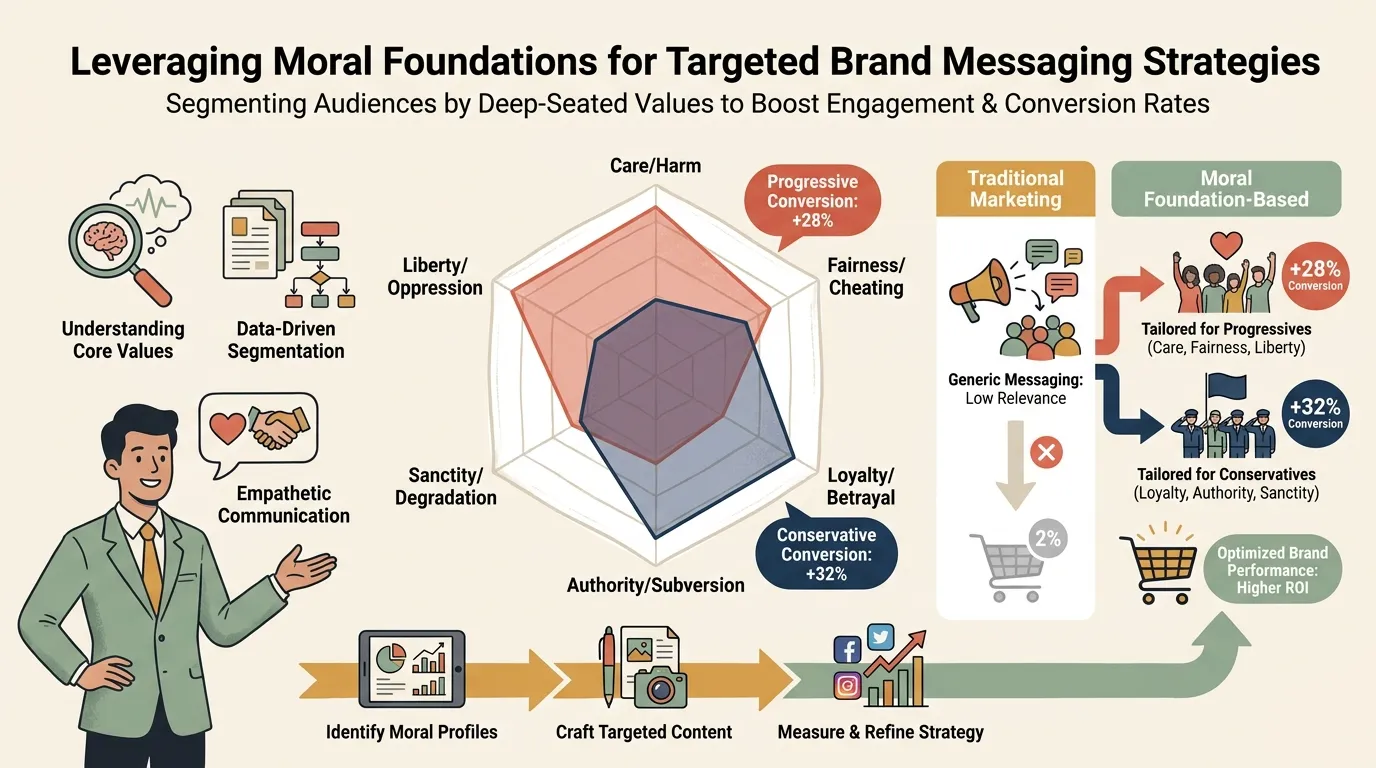
Moral Foundations Theory (MFT) breaks moral judgment into six foundations: Care, Fairness, Loyalty, Authority, Sanctity, and Liberty. Long established in political psychology, its structured application to marketing had lagged — until this paper.
The authors’ central claim: the same product, pitched on different moral foundations, produces measurably different purchase probabilities and willingness to pay.
What the Six Foundations Are
Each MFT foundation evolved to address a distinct social challenge across human history.
Care is rooted in empathy and the drive to protect vulnerable beings — children, family, the weak. Fairness governs reciprocity, equality, and avoidance of cheating; it drives the sense that one deserves fair treatment and hates being deceived.
Loyalty relates to in-group solidarity and team commitment. Authority drives respect for hierarchy, tradition, and legitimate order. Sanctity covers purity and disgust sensitivity. Liberty — added in the 2000s — captures the backlash against oppression or coercive domination.
In U.S. data, progressive consumers tend to show higher sensitivity to Fairness and Care; conservative consumers score comparably or higher on Loyalty, Authority, and Sanctity. This is not a difference in moral worth — it is a difference in which moral circuits fire most readily.
Why Ethical Consumption Messaging Doesn’t Reach Everyone
The reason ESG messaging fails to convert every segment becomes structurally legible through MFT.
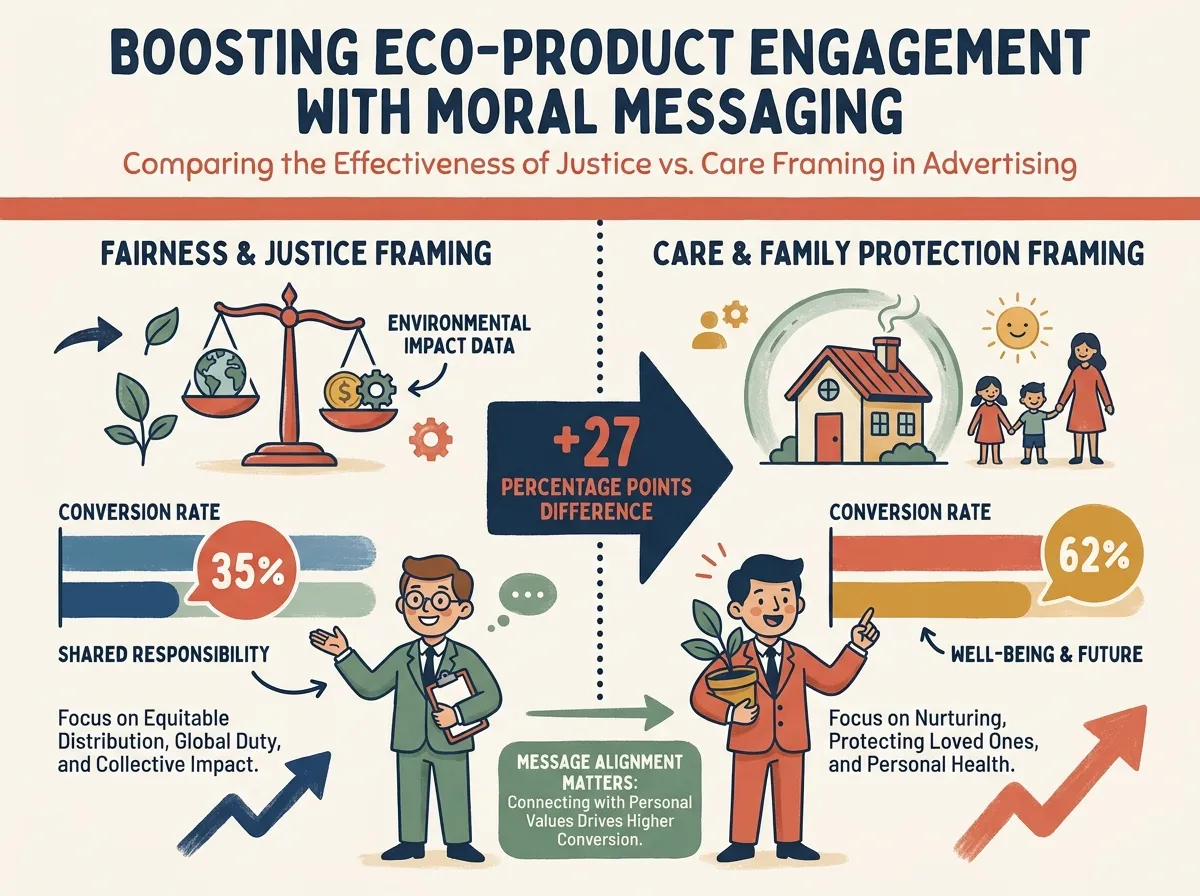
“Fair treatment of the environment” and “care for all living beings” are powerful activators for consumers whose Care and Fairness foundations are dominant. But for consumers who score high on Loyalty or Authority, the same product framed as “protecting your family” or “carrying forward your community’s tradition” can recover significant purchase intent.
Rather than giving Fairness-resistant consumers more accurate data, try switching moral foundations entirely.
This is a shift from persuasion to resonance — not convincing people to adopt new values, but placing the message on the moral channel they already use.
Predicting Boycotts and Buycotts
The paper also demonstrates that boycott (active avoidance) and buycott (active endorsement) behaviors are predictable from Identity-Based Preferences and moral foundation profiles.
When a brand violates the foundational moral axis a consumer is bonded through — a loyalty-sensitive consumer experiencing a brand betrayal, for instance — the response is processed not as disappointment but as moral transgression. The intensity of the reaction is determined less by the depth of prior attachment and more by the strength of the violated foundation.
This framework has clear applications for brand crisis risk management. Identifying which moral foundation a boycott movement draws on reveals which segments will defect and which can be retained.
Designing Brand Morality
The concept of Brand Morality that the authors propose is practical. A brand that consistently signals alignment with one or two foundations can build long-term loyalty by resonating with its target segment’s dominant moral circuitry.
“The cleanliness that protects your family” activates Care and Sanctity. “The same quality for everyone” speaks to Fairness. “Craftsmanship rooted in Japanese tradition” connects to Loyalty and Authority. “You decide your own way” speaks to Liberty.
One key implication: activating too many foundations simultaneously tends to dilute the message — a real risk in culturally mixed global markets where foundation weightings differ substantially across segments.
Practical Takeaways
When applying MFT to marketing, the right starting question isn’t “which foundation does this brand sit on?” — it’s “which foundations are dominant in the target segment?”
Revisiting NPS data or Voice-of-Customer feedback through an MFT lens clarifies why certain complaints become emotionally charged and why certain campaigns drive repeat purchase. The six foundations serve as both a segmentation axis and a creative brief starting point.
Related Articles
When Clicks Disappear: Five Marketing Trends Dominating 2026
10 Psychological Pricing Techniques: How Reference Points Shape Purchase Decisions
Seven Axes of Psychological Pricing and the Trust They Quietly Erode
Why Japanese Companies Keep Apologizing for Price Increases — and How Value-Based Pricing Fixes It
Why Some Experiences Feel Truly Fun