The Invisible Hand of EC Rankings: How Ranking Algorithms Distort Market Prices
New SSRN research quantifies how algorithmic attention concentration lets top-ranked sellers charge more
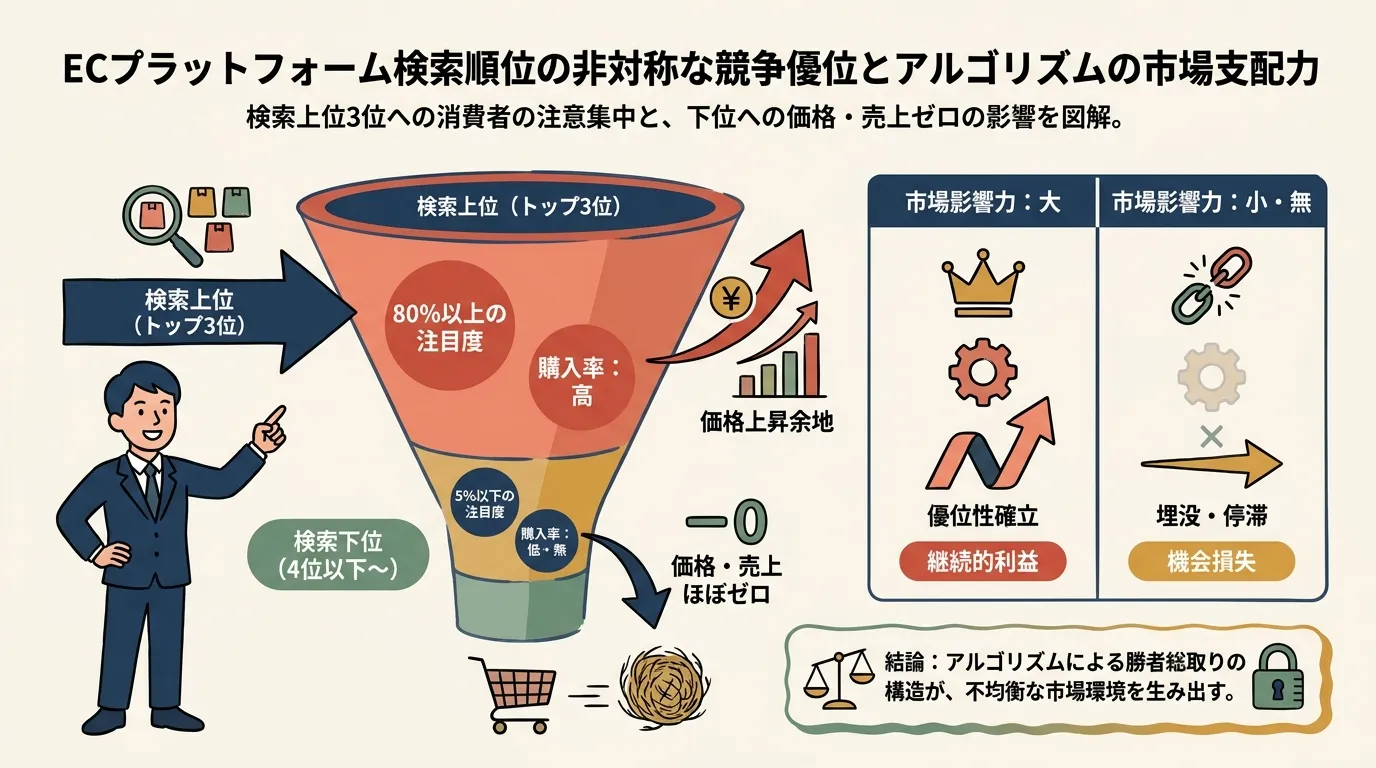
When a shopper types a search query on a large e-commerce platform, the ranking algorithm decides which products they see first. This seems like a neutral service—a relevance filter. A new paper released on SSRN in April 2026 argues otherwise. Using complete internal data from a major U.S. e-commerce platform, authors Huang, Korganbek, and collaborators demonstrate that ranking algorithms structurally raise equilibrium prices for top-ranked sellers—without any collusion, without any explicit coordination, and without the sellers doing anything other than being ranked higher.
The Mechanism: Attention as Market Power
The paper’s central argument rests on Algorithmic Attention Concentration: the concentration of consumer attention on high-ranked products produced by the sorting logic of the platform.
In traditional economics, attention is assumed to be evenly distributed enough that price competition disciplines sellers. If seller A charges more than seller B for an equivalent product, shoppers compare and choose B. Price equalization follows.
Ranking algorithms break this assumption. A product in position 1 receives dramatically more impressions than a product in position 10—not because it is better, but because the algorithm placed it there. Consumers in the Attention Economy operate under time scarcity; they don’t scroll far. The result is that the top-ranked seller is effectively shielded from price comparison with lower-ranked alternatives: shoppers who see only the top results compare among those results, not across the full catalog.
This attention concentration functions as Market Power without requiring any of the traditional prerequisites for market power—scale, switching costs, or network effects. The algorithm provides it for free to whoever it ranks first.
What the Data Shows
The paper’s empirical contribution is rare: access to the platform’s internal ranking data, purchase records, and pricing history. Most prior research on algorithmic pricing relied on scraped data or platform-disclosed aggregate statistics. Full internal access allows the authors to isolate the causal effect of rank on equilibrium price.
Key findings:
Top-ranked sellers charge more and sell more simultaneously. In competitive markets, higher prices typically mean lower volume. The data shows top-ranked sellers breaking this trade-off: they face lower price sensitivity from shoppers who treat rank as a quality signal and do not invest effort in comparison shopping further down the results page.
Lower-ranked sellers lose the incentive to compete on price. A seller in position 15 cannot attract meaningfully more attention by cutting price 10%. The attention differential is too large. Price competition becomes irrational for low-ranked sellers because the expected marginal attention gain from a price cut does not compensate for the margin loss.
The effect is asymmetric. Losing rank from position 1 to position 3 causes a significantly larger pricing constraint than losing rank from position 10 to position 12. The Attention Economy reward function is convex at the top—a small rank change at the summit has outsized economic consequences.
The Consumer Psychology Behind the Distortion
The mechanism works because consumers use rank as a Search Friction-reducing heuristic. Evaluating forty products is cognitively expensive. Ranking algorithms are supposed to surface the most relevant results, and consumers mostly trust that they do. This trust transfers into a quality attribution: “it’s at the top, so it must be good enough to not need comparing further.”
This is a framing effect. Position 1 is not inherently a quality certification, but the algorithm’s act of placing something there recruits the consumer’s existing heuristic that “prominent placement signals endorsement.” The same phenomenon drives the effectiveness of physical endcaps in retail, feature placement in app stores, and “Editor’s Choice” badges in subscription services.
The result is that consumers’ price sensitivity—their willingness to scroll down and compare—is suppressed not by the product but by the architecture of the interface. [[Algorithmic-attention]] concentration is, in this sense, a form of manufactured Search Friction: the platform’s design makes comparison shopping harder than it needs to be, and sellers who benefit from high rank capture the economic surplus.
Implications for Competition Policy
The paper enters a policy debate that has been building since the EU’s Digital Markets Act and the U.S. discussions around platform self-preferencing. Its contribution is providing empirical evidence that ranking algorithms generate market-power-equivalent effects even when:
- The platform is not selling its own products in the ranked categories
- The ranking is not explicitly manipulated for commercial gain
- Sellers have not paid for the favorable positions
The “invisible hand” framing in this article title is intentional. Adam Smith’s invisible hand was supposed to guide competitive markets toward efficient outcomes. The algorithm’s invisible hand does the opposite: it produces equilibrium prices above the competitive level, benefiting the platform (through commissions on higher-priced sales) and the top-ranked sellers, at the expense of consumers and lower-ranked competitors.
Calls for ranking transparency—mandating that platforms disclose the factors that determine rank—gain empirical weight from this paper. If rank is demonstrably a source of Market Power, it should be subject to the same scrutiny as other forms of market power.
What Sellers Can Do
For businesses competing on large e-commerce platforms, the paper’s findings carry several practical implications:
Rank is an asset worth auditing. If your products consistently rank in positions 8–15, the pricing ceiling you face is not just about your costs or the category’s natural willingness-to-pay. It is partly a function of the attention gap between you and the top three. Closing that gap—through better content, review velocity, or (where allowed) advertising—changes your pricing dynamics.
Rank loss deserves a pricing review. A drop from position 2 to position 5 may require a temporary price cut to maintain volume during the attention shortfall—not because your product is worse, but because the attention architecture shifted.
Category selection matters. In categories where algorithmic attention is heavily concentrated (few sellers dominate the top three positions consistently), late entrants face structural price ceilings. Categories with more rank volatility offer more competitive opportunity.
Platform diversification is a hedge. [[Search-friction]] profiles differ across platforms. A seller who ranks highly on one platform but not another may find their pricing power asymmetric across channels—a signal worth tracking systematically.
The paper’s core insight—that the algorithm is not neutral, it is a price-setting force—should recalibrate how any seller thinks about the relationship between ranking, pricing, and platform strategy.
Sources: Ranking Algorithms and Equilibrium Prices — Huang et al., SSRN Marketing eJournal, April 2026; The Economics of Attention — Lanham, 2006, University of Chicago Press; Digital Markets Act — European Commission, 2022
Related Articles

When Clicks Disappear: Five Marketing Trends Dominating 2026
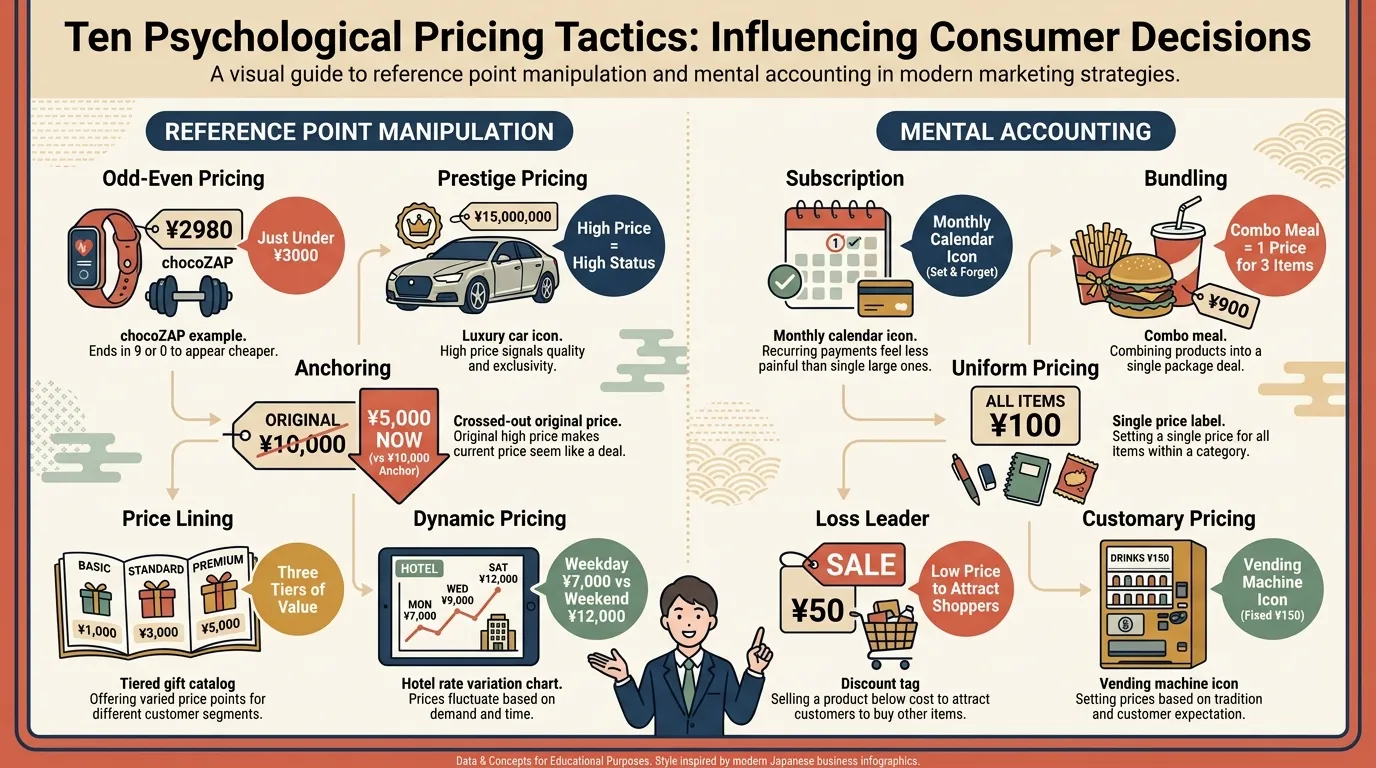
10 Psychological Pricing Techniques: How Reference Points Shape Purchase Decisions
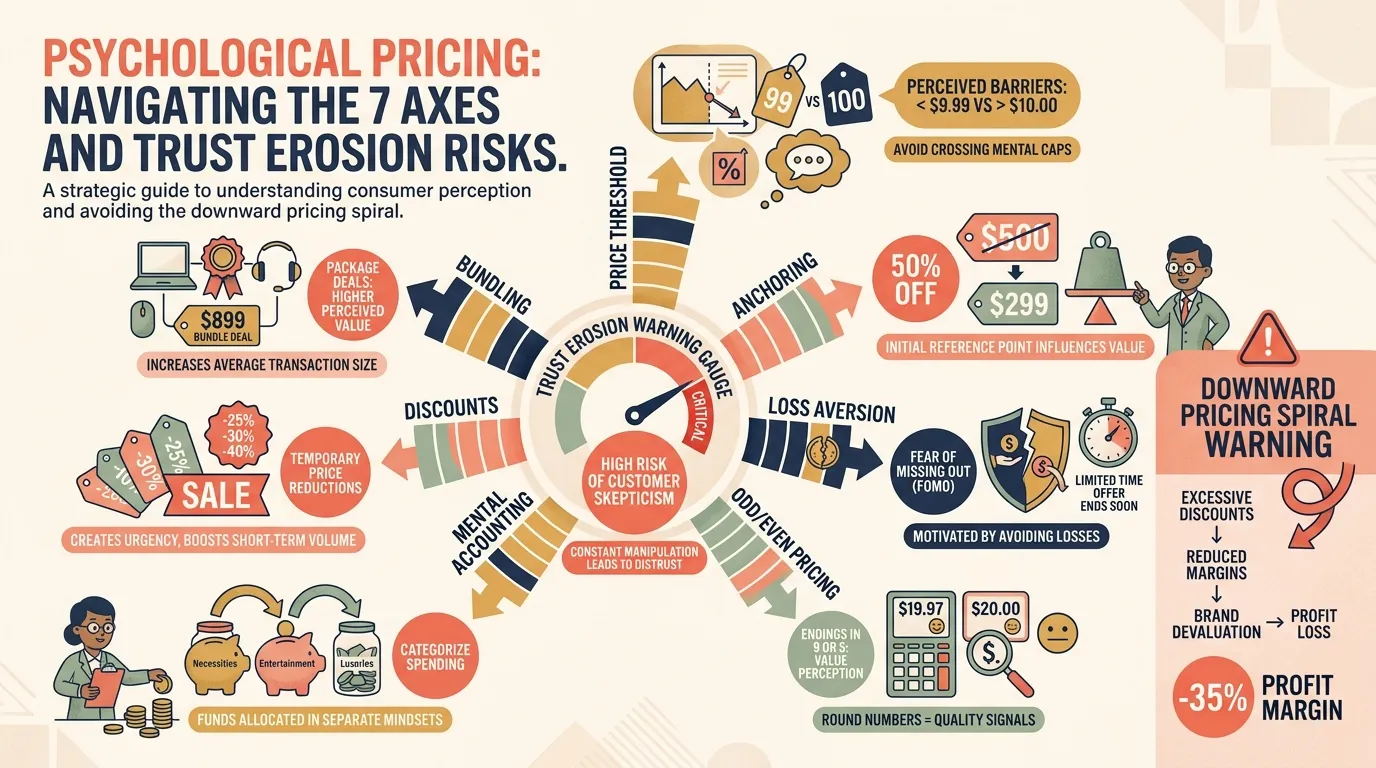
Seven Axes of Psychological Pricing and the Trust They Quietly Erode
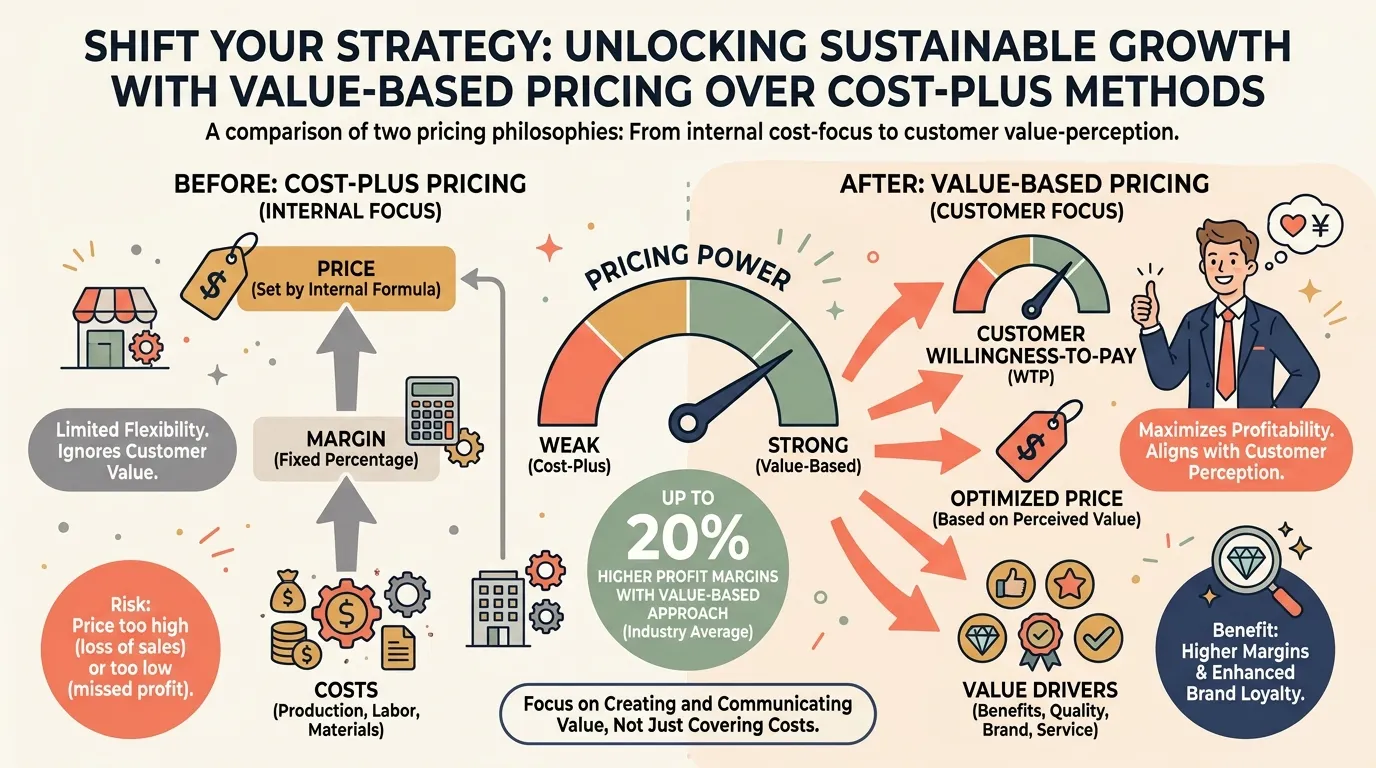
Why Japanese Companies Keep Apologizing for Price Increases — and How Value-Based Pricing Fixes It
Why Some Experiences Feel Truly Fun