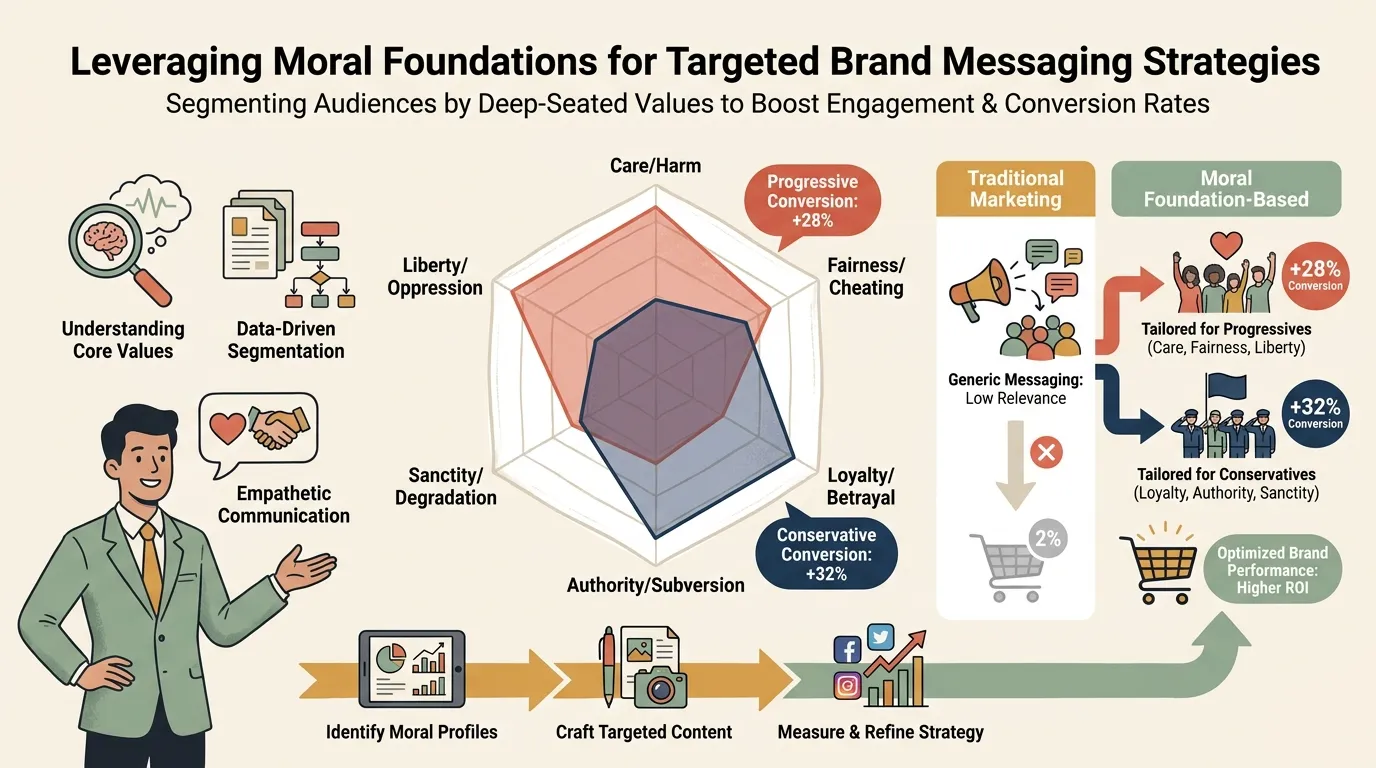
The Ethics Gap in Neuromarketing: Agency Theory, AI Bias, and Why a $3.7B Industry Needs a Governance Overhaul
A Sage review argues that the three-party structure of neuromarketing produces moral hazard by design — and AI is accelerating the problem
Neuromarketing — the practice of measuring brainwaves, eye movements, and galvanic skin response to optimize marketing — is a $3.7 billion industry growing at 11.4% CAGR. It is also, according to a 2026 Sage paper by Singh and Kumar, an industry whose ethical infrastructure lags dangerously behind its capabilities. The authors apply agency theory and Stakeholder Theory to map a structural conflict of interest baked into the three-party neuromarketing relationship — and show how AI adoption is intensifying the problem.
The Agency-Theory Diagnosis
Standard neuromarketing engagements involve three parties:
- Brand (principal): Wants actionable consumer insights that increase purchase behavior
- Research firm (agent): Wants to report good results and retain the contract
- Regulatory body: Chronically under-resourced and technically behind the research it is meant to oversee
Agency theory predicts that when the agent’s incentives diverge from the principal’s true interest — and when the principal cannot directly observe the agent’s effort — moral hazard follows. The research firm’s desire to deliver “positive” findings creates systematic pressure toward favorable interpretation, cherry-picked methodologies, and insufficient disclosure of limitations.
The crucial difference from standard market research: neuroimaging data is cognitively intimate. EEG signals, fMRI activation patterns, and biometric responses are records of subconscious mental states. The privacy stakes are categorically higher than a survey answer, yet the commercial research context strips away the institutional protections that academic neuroscience mandates.
Three Ethical Blind Spots
1. Informed consent in name only Participants are told their brainwaves will be recorded, but rarely understand how the data will be used, stored, or shared downstream. [[Informed-consent]] in academic Neuroimaging Ethics requires comprehension, not just signature — commercial neuromarketing currently requires neither. The consent form becomes a liability shield rather than a genuine communication of risk.
2. The AI bias amplifier Machine learning has made neuromarketing faster and more scalable. It has also imported a structural problem: if training data overrepresents specific demographics (typically young, urban, high-income), the models’ “consumer insights” will be systematically skewed toward that group’s neural responses. Brands acting on these insights will target — and inadvertently optimize for — that subset, potentially producing discriminatory marketing outcomes that are invisible precisely because they are encoded in a model.
3. The IRB exemption gap Academic neuroscience requires Institutional Review Board (IRB) approval for any human-subjects research. Commercial neuromarketing is classified as “business research,” not academic inquiry, and is therefore exempt. This taxonomic distinction strips away the primary ethical safeguard without replacing it with any equivalent mechanism.
What the Framework Demands
Singh and Kumar propose a four-component ethics architecture:
Transparency standards: Mandatory disclosure templates requiring neuromarketing firms to specify data collection purpose, retention duration, third-party sharing, and AI model usage before participant recruitment.
AI bias auditing: Periodic independent audits of training data demographics and model outputs, with public reporting. This mirrors financial audit requirements and creates accountability that pure self-regulation cannot.
Conflict-of-interest separation: Require the party that designs the study to be institutionally separate from the party that interprets the results — a double-blind structure that reduces the agent’s ability to shape findings toward client preference.
Soft governance acceleration: Industry associations and academic bodies can move faster than regulation. Ethics certification as a competitive differentiator — a “neuromarketing trustmark” — creates market incentives for compliance before legal mandates arrive.
The Ethics-Wash Risk
A legitimate concern: governance frameworks become performative. ISO environmental certifications normalized greenwashing; neuromarketing ethics certification could normalize “ethics-washing” — raising compliance costs while thinning actual substance. Meaningful AI bias auditing is technically demanding; disclosure of training data demographics exposes proprietary information that firms will resist. The framework’s value depends entirely on whether auditing is independent, technically rigorous, and consequential.
What Brand Marketers Should Do Now
Even absent regulation, brand buyers of neuromarketing services bear responsibility for what they procure. Practical steps:
- Ask for study design separation: Require that the firm designing the protocol is not the same person interpreting the findings, or demand a registered pre-analysis plan.
- Request demographic composition of training data for any AI-assisted analysis. If the firm can’t or won’t provide it, treat that as a red flag.
- Audit consent forms against comprehension standards, not just legal minimum signature requirements.
- Treat IRB absence as a risk factor: Commission external ethics reviews for high-stakes neuromarketing engagements, even where not legally required.
Bottom Line
The neuromarketing ethics problem is not caused by bad actors — it is caused by a system architecture that produces moral hazard even when all three parties have good intentions. Agency theory’s prescription is incentive redesign and forced transparency. As the market passes $3.7 billion, the cost of reactive governance — reputational damage, regulatory backlash, and erosion of consumer trust — will exceed the cost of building ethical infrastructure now.
Related Articles
When Clicks Disappear: Five Marketing Trends Dominating 2026
10 Psychological Pricing Techniques: How Reference Points Shape Purchase Decisions
Seven Axes of Psychological Pricing and the Trust They Quietly Erode
Why Japanese Companies Keep Apologizing for Price Increases — and How Value-Based Pricing Fixes It
Why Some Experiences Feel Truly Fun